Hallowe’en Countdown VII, Day 25

« Je suis American / Please cook my steak again. » — Ben Folds

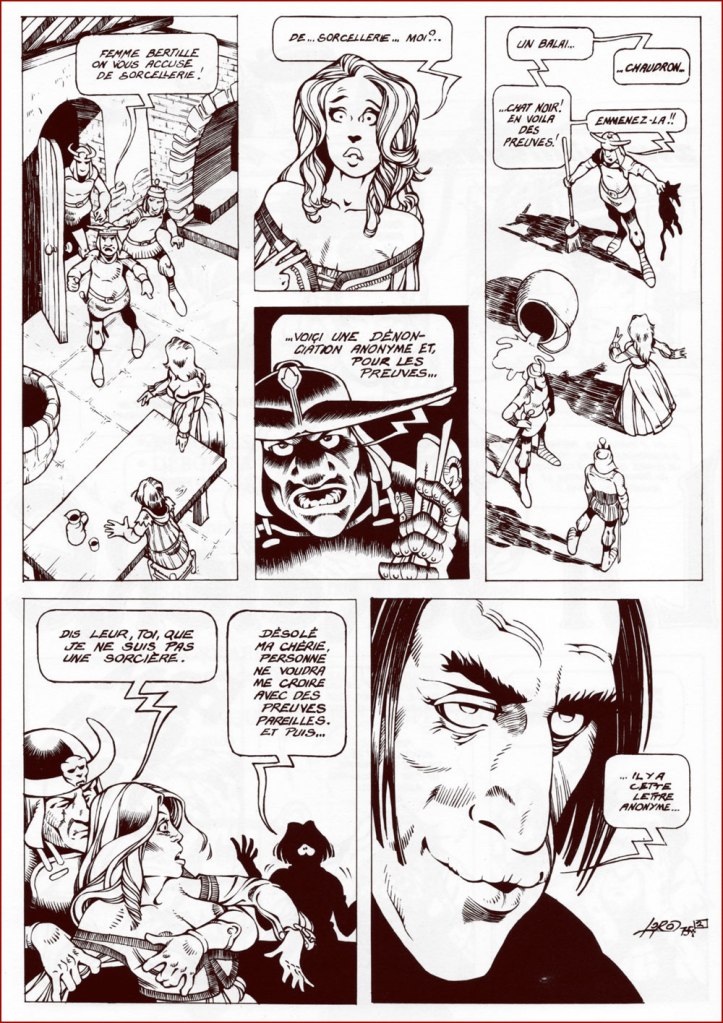
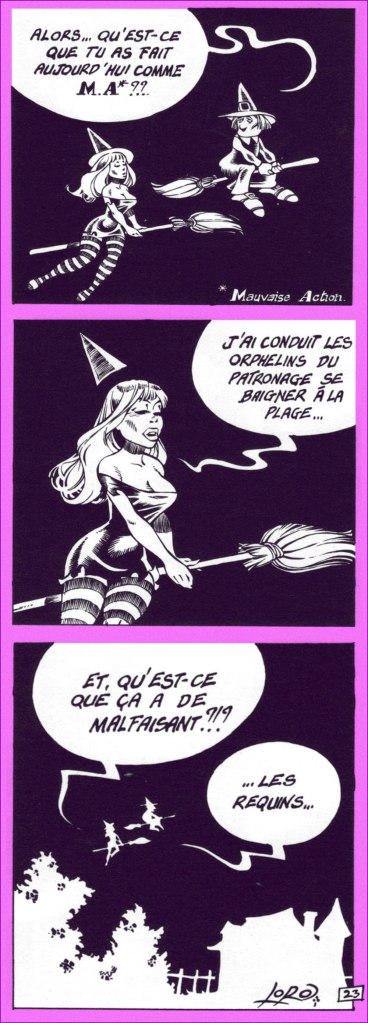
Serge de Bechetch (1946-2007) and Jean-Marc « Loro » Laureau (1943-1998)’s Déboires d’Outre-tombe was an off-and-on (1969-75) series of short pieces parodying horror movie tropes. It took its (clever!) title from diplomat-author François-René de Chateaubriand (1768-1848)’s Mémoires d’Outre-TombeMemoirs From Beyond the Grave »); “Déboires” signifies ‘a run of bad luck’ or, originally, ‘an unpleasant aftertaste’ from drinking wine. Nowadays, Chateaubriand is mostly associated with his chef’s favourite steak recipe.

To be honest, while Loro’s artwork was often inspired, Déboires’ gags mostly fell flat; I presume that the creators had no idea how hoary these monster jokes had become, not having been exposed to the likes of Famous Monsters of Filmland, Topps’ ‘You’ll Die Laughing‘ card set, Mad, Cracked, Sick… and all the glut of parody mags. However, Loro was for a time — and right from the start — editor of the French edition of Warren’s Creepy, which was, imho, superior to the original thanks to better printing and, most significantly, its brand-new, first-rate documentary material created by Midi Minuit Fantastique alumni, replacing Warren’s cool, but repetitive in-house Captain Company adverts.

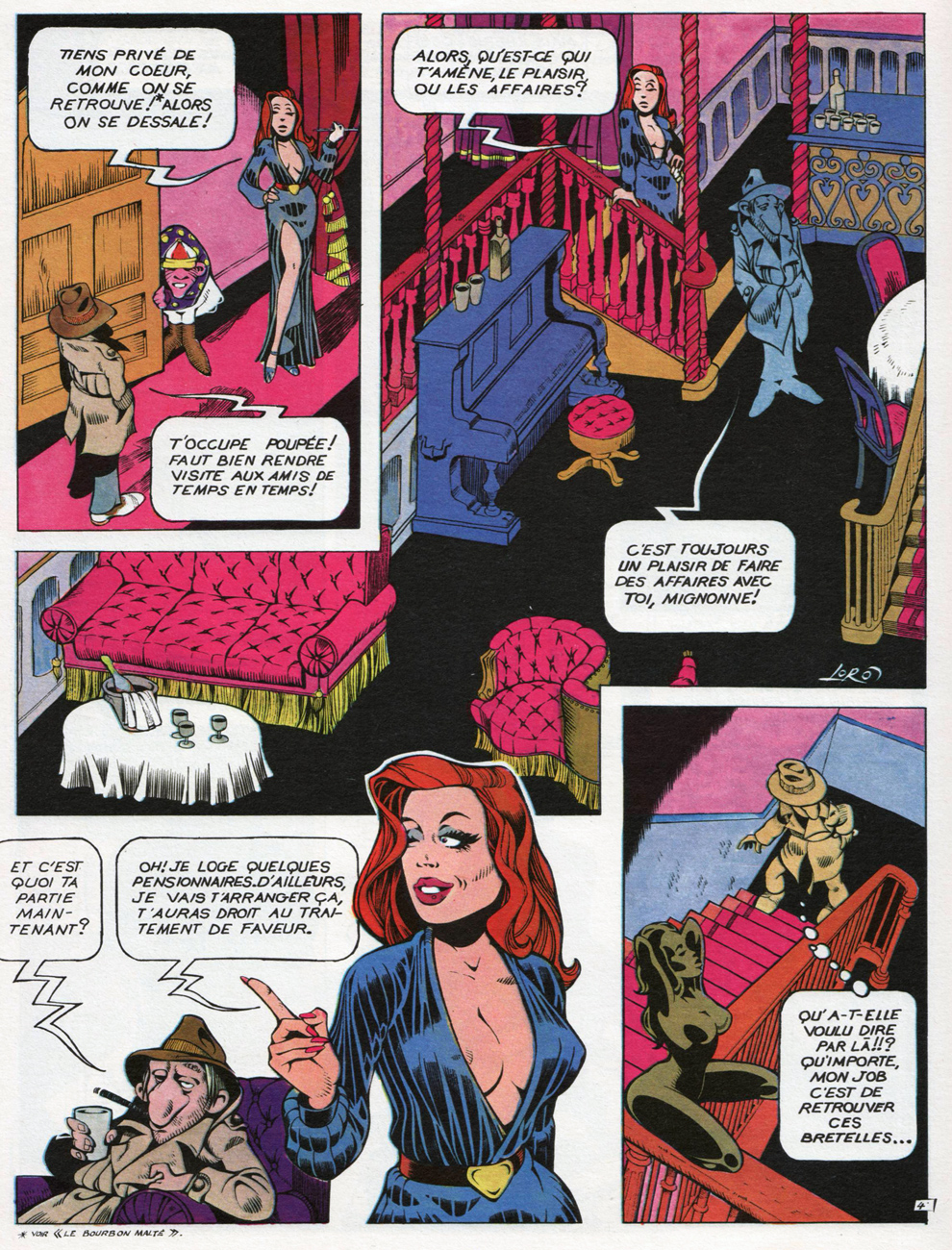
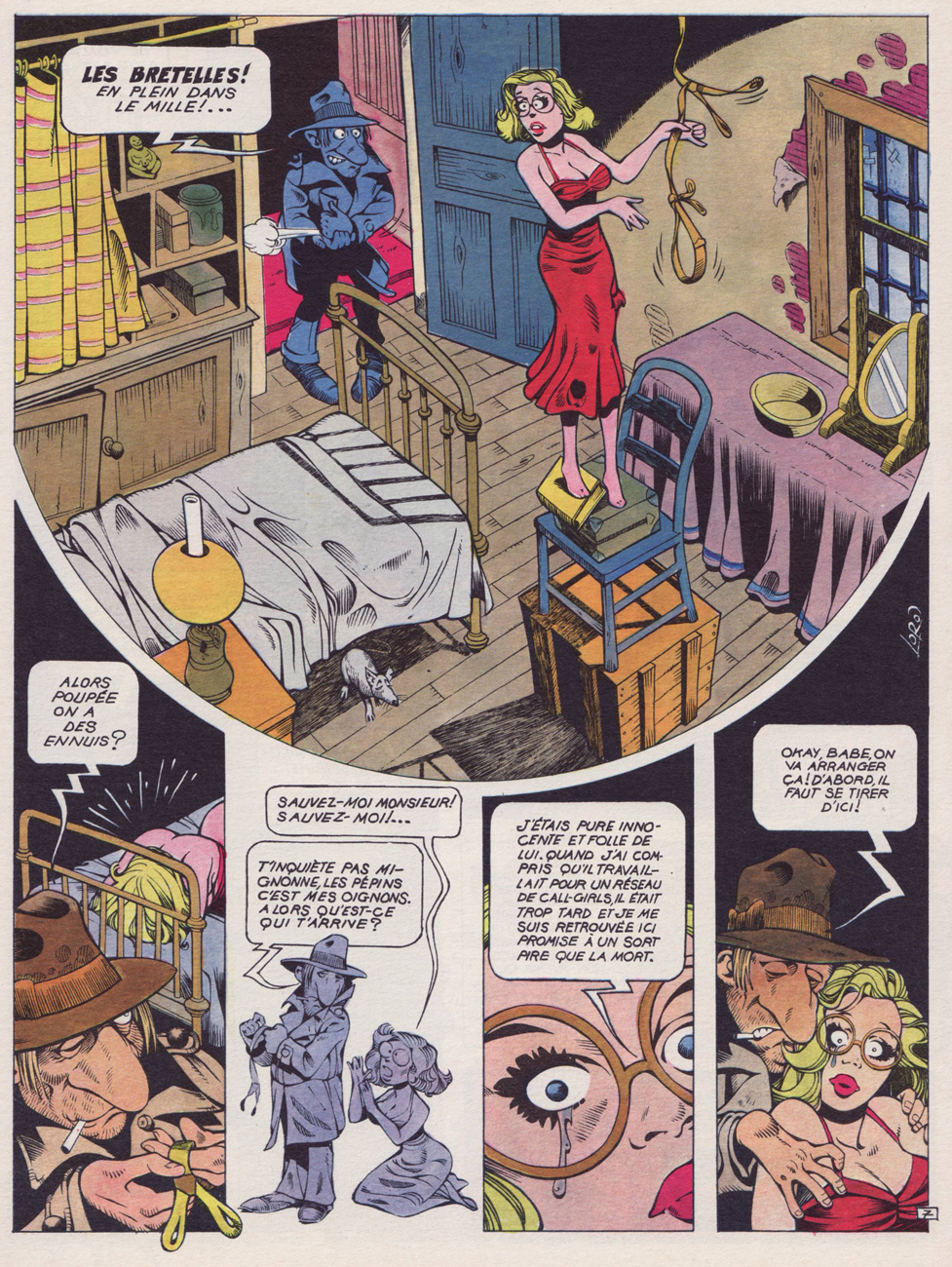
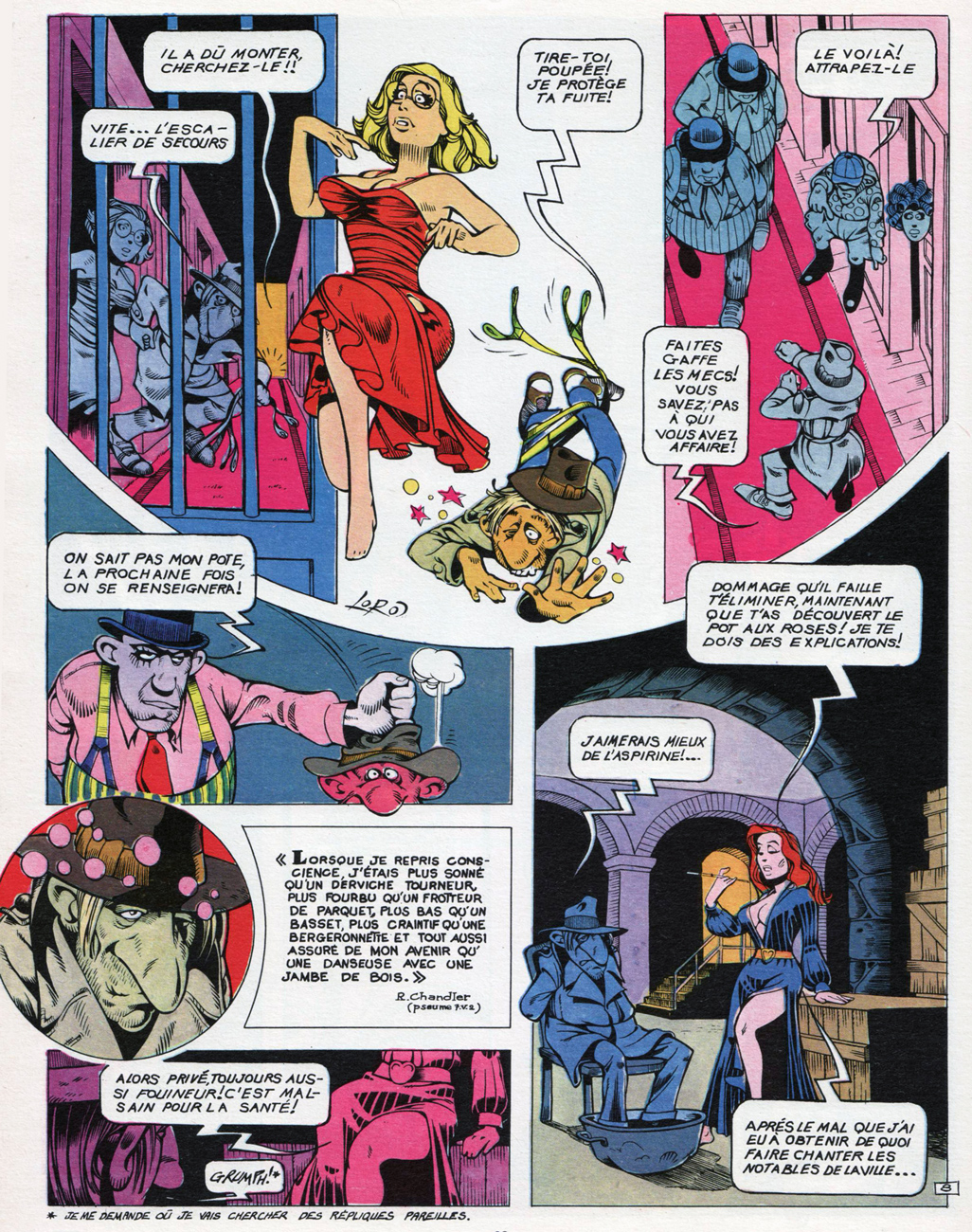
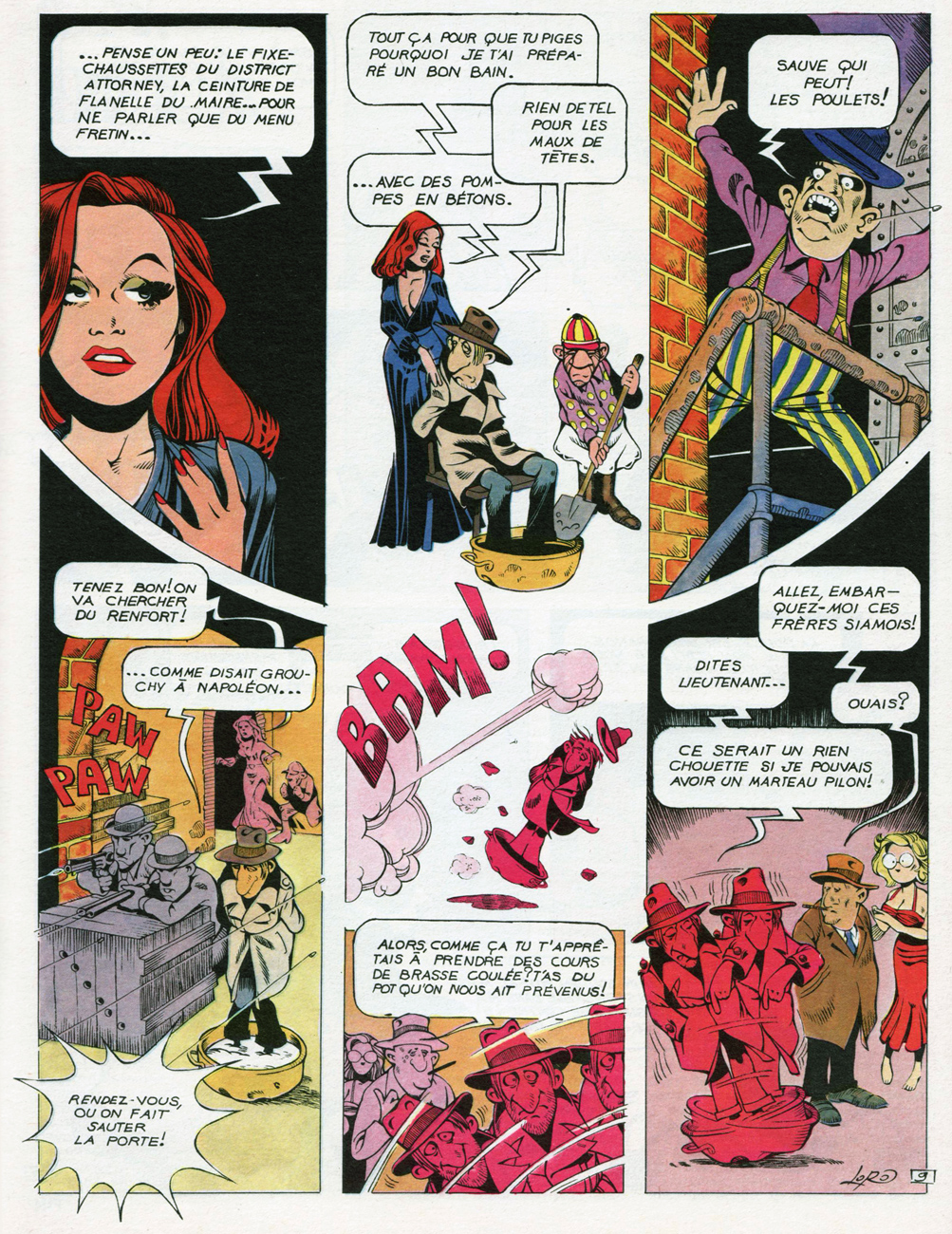
Here are the strips I consider standouts. Just a few years on, Loro would attain his peak with the early cases of gumshoe Abel Dopeulapeul, whom we’ve featured a few years back. Contrast and compare!

Volume one of Déboires d’outre-tombe (1981, Éditions du Cygne).
Volume two of Déboires d’outre-tombe (1982, Éditions du Cygne).
« You can tell a good workman by his tools!!! »
Loro was clearly catching a lot of Hammer films of the era.
The plot, in a nutshell: Bertille constantly henpecks her husband because of his general rakishness and lack of gainful employment. Oh, but he’s found a job, he claims. Just then, she’s anonymously denounced as a witch. « I told you, Bertille. You see… I’ve found some work. »
« So, what have you done today as a bad action? »
« I took the orphans from the youth club to the beach for a swim… »
« And what’s so evil about that? » « The sharks… »

-RG
Loro’s Abel Dopeulapeul, privé

« The French have a phrase for it. The bastards have a phrase for everything and they are always right. To say goodbye is to die a little. »

― Raymond Chandler, The Long Goodbye

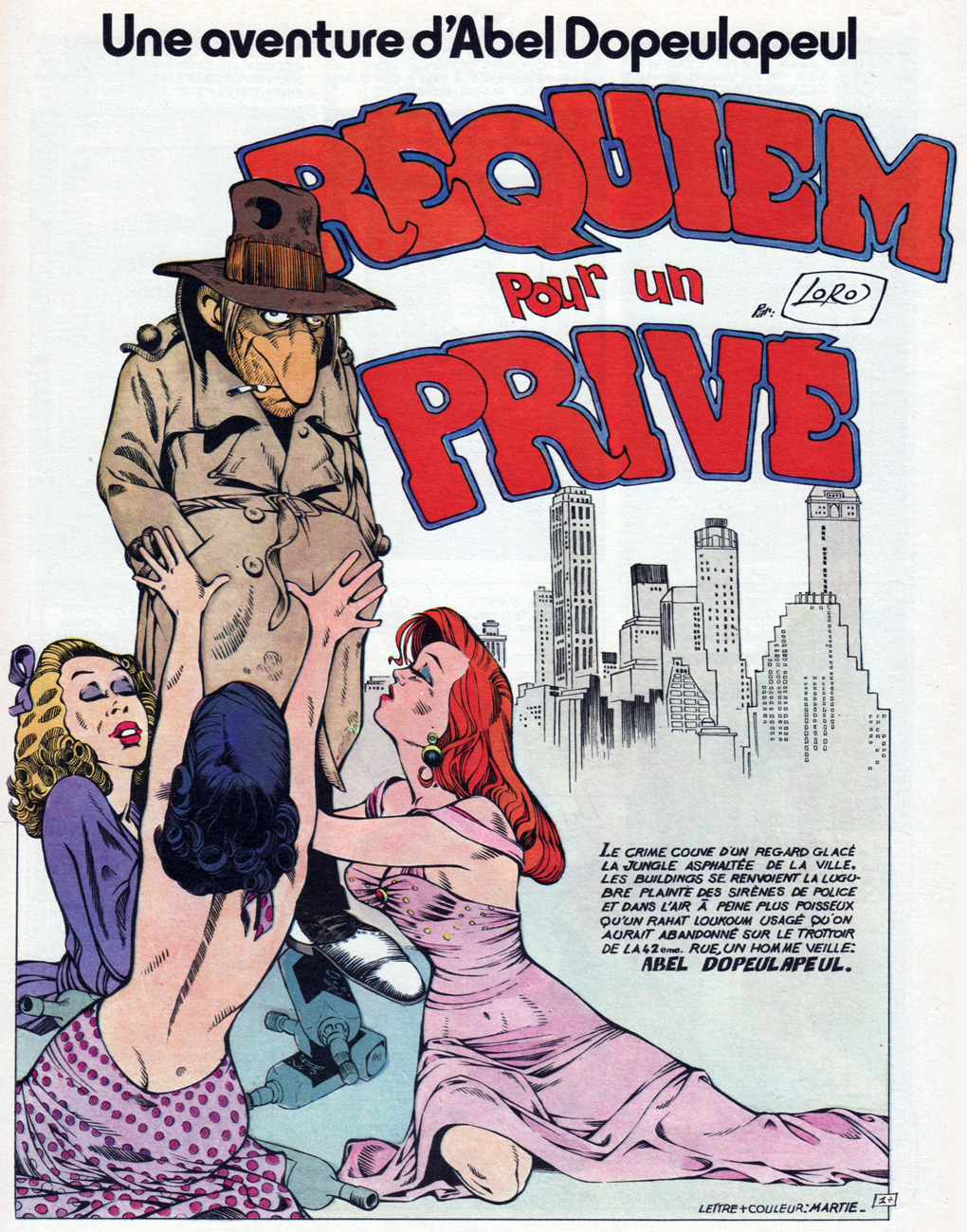
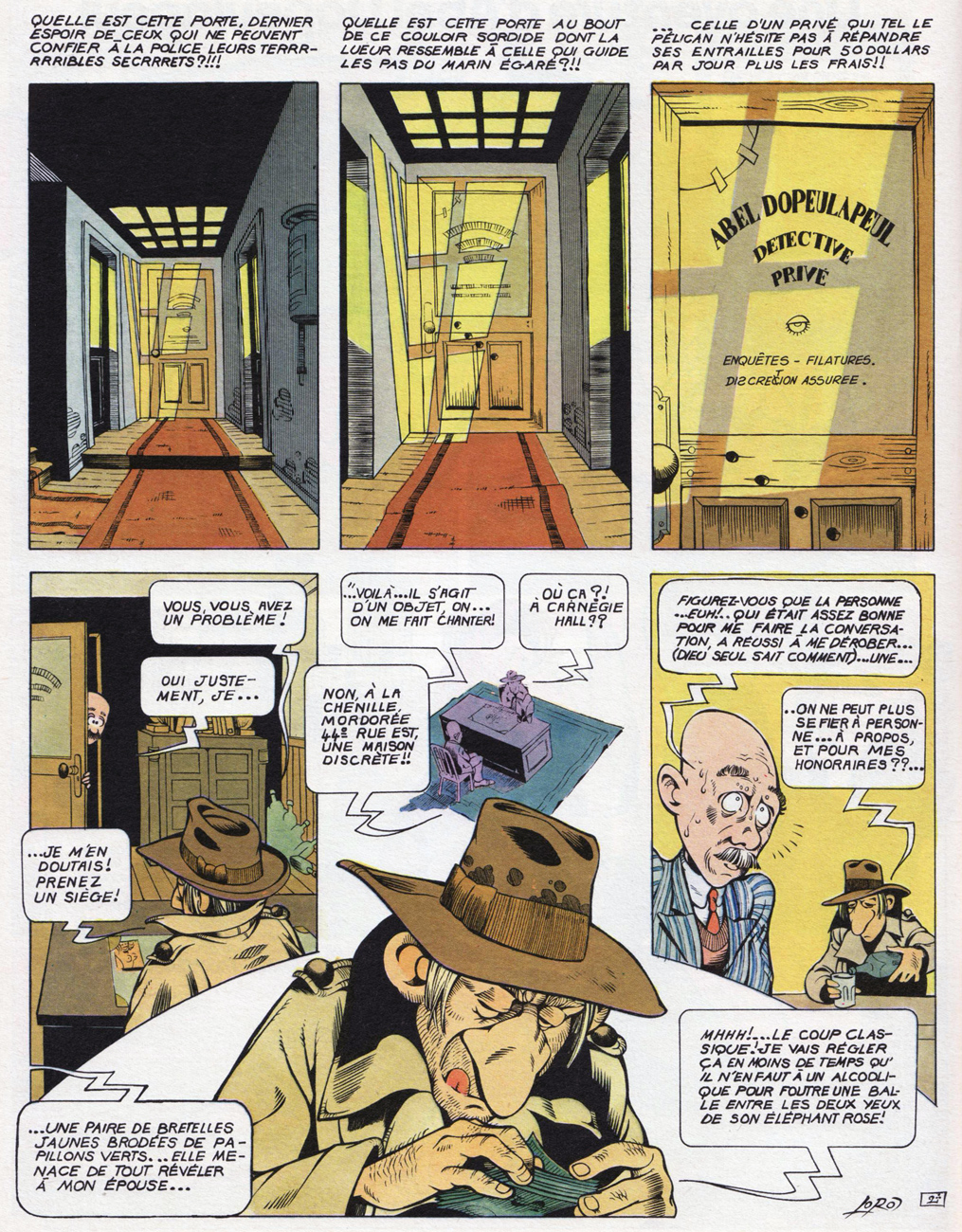
Dopey private detective parodies are a dime-a-dozen, and they seldom raise more than a lazy, jaded chuckle. With that out of the way, just how does Jean-Marc « Loro » Laureau (1943 – 1998)’s Les enquêtes d’Abel Dopeulapeul pull ahead of the pack? Let’s see: while it’s hardly side-splitting, it nevertheless scores precious points on the hilarity front by maintaining a mostly deadpan tone. But… one quick peek at the strip and the jig is up: it’s a glorious, unabashedly visual feast. Loro was blessed with that rather uncommon gift, the ability to seamlessly mix the cartoonish and the realistic. Even Wally Wood couldn’t pull that off. Frank Cho is a perfect contemporary example of someone who’s utterly incapable of it.

LoroPortraitA
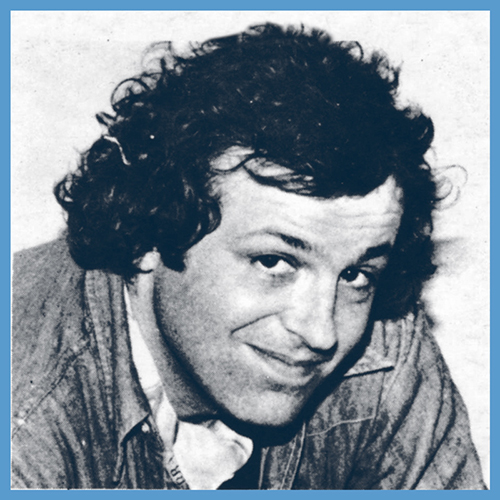
Monsieur Laureau himself, in the late 1970s.

M.A. Guillaume, who penned the back cover copy for the second Abel collection, Sale temps pour mourir (1979, Dargaud), clearly gets the picture. I’ll translate:

« Dopeulapeul, a parodic and cretinized response to [Philip] Marlowe, views himself as that marvellous guy who stalks vice and corruption on fifty dollars a day plus expenses. Within the haze of his dream fed by adulterated bourbon, he doubtless imagines he’ll croak on some moonless night, alone like a dog behind the last trashcan of some filthy dead end. The reader will cackle maliciously, knowing no-one gives a toss about the death of a caricature. But he’ll be wrong. Dopeulapeul conducts himself like some village idiot in the throes of some clandestine passion for Lauren Bacall. His blasé detachment, dragging a language school aftertaste, is as seductive as an unkempt stinkbug. It matters little how offhandedly Loro may treat the tentative meanderings of this poor beggar. Within him slumbers a fascinated vision that survives all clichés: in the debauched night, a man moves along, and his shadow is weary of knowing too well the callousness of the blacktop and of men’s hearts. He is free and solitary and Death is at his heels.

Parody can’t put a dent to that, and Loro knows it full well. He may laugh, parody, demystify, “Sale temps pour mourir” is nonetheless an homage to an untouchable legend. »

Loro is all-but-forgotten nowadays, but his ability to channel vintage Will Eisner (particularly The Spirit) without aping him, while displaying plenty of his own pyrotechnics, by itself deserves a more prominent place in history.

LoroRequiem01ALoroRequiem02ALoroRequiem03ALoroRequiem04ALoroRequiem05ALoroRequiem06ALoroRequiem07ALoroRequiem08ALoroRequiem09ALoroRequiem10A

« Réquiem pour un privé », an early entry in the series, first saw print in Pilote Hors série aventure (No 17 bis, October 1975, Dargaud)

-RG