Hallowe’en Countdown VIII, Day 26

« Sooner or later we all sit down to the banquet of consequences. » — Robert W. Frank, paraphrasing Robert Louis Stevenson

Today, we ask: who was Peter Randa? I’m asking because I read one of his books at random — actually, the comics adaptation, and was deeply impressed with its quality. Randa, né André Duquesne (1911-1979) in Marcinelle, Belgium, wrote some 300 hundred novels in various genres over a mind bogglingly productive quarter-century under a myriad of pseudonyms, namely Jean-Jacques Alain, Urbain Farrel, Herbert Ghilen, Jules Hardouin, Jim Hendrix (!), Henri Lern, André Ollivier, H.T. Perkins, F.M. Roucayrol, Diego Suarez, Jehan Van Rhyn and Percy Williams. There may be others. He dealt in the genres of science-fiction, horror, espionage, crime, and erotica (with over fifty novels written in the early 1970s).

Two more covers (respectively 1955 and 1973) painted by the also miraculously prolific French illustrator Michel Gourdon. Here’s a segment from a French TV show touching upon the scope of his career, on the occasion of the auctioning of his vast trove of original art. Hope it all found good homes.

Well, here’s the basic plot, taken from the current e-book edition (which I’m grateful exists at all, as even outstanding work often languishes in utter obscurity or downright oblivion):
« Archie Leggatt is a madman, a real one. He believes himself the Devil, had kidnapped three young women and terrorised a fourth. A run-of-the-mill serial killer? Perhaps… but when such an un assassin boasts supernatural powers and leaves more than the scent of brimstone behind, physicians and investigators begin to wonder and ask themselves questions with terrifying implications. Can one truly hope to put Satan behind bars? »

Illustrator unknown, wouldn’t you know it? Given his skill, style and stamina, I’m guessing he’s Spanish, but beyond that, I’m drawing a blank. Still, kudos to this anonymous artistic practitioner.
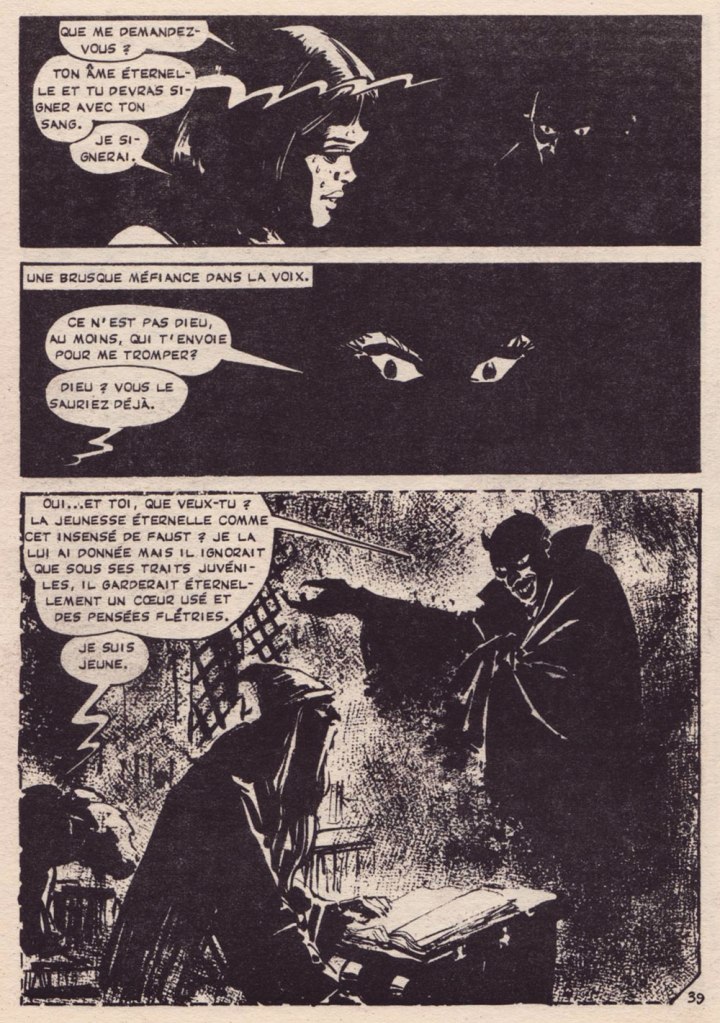
I know, I know: it’s Warren’s Uncle Creepy with a pencil moustache.

Jeannine agrees to the Faustian deal Leggatt proposes.

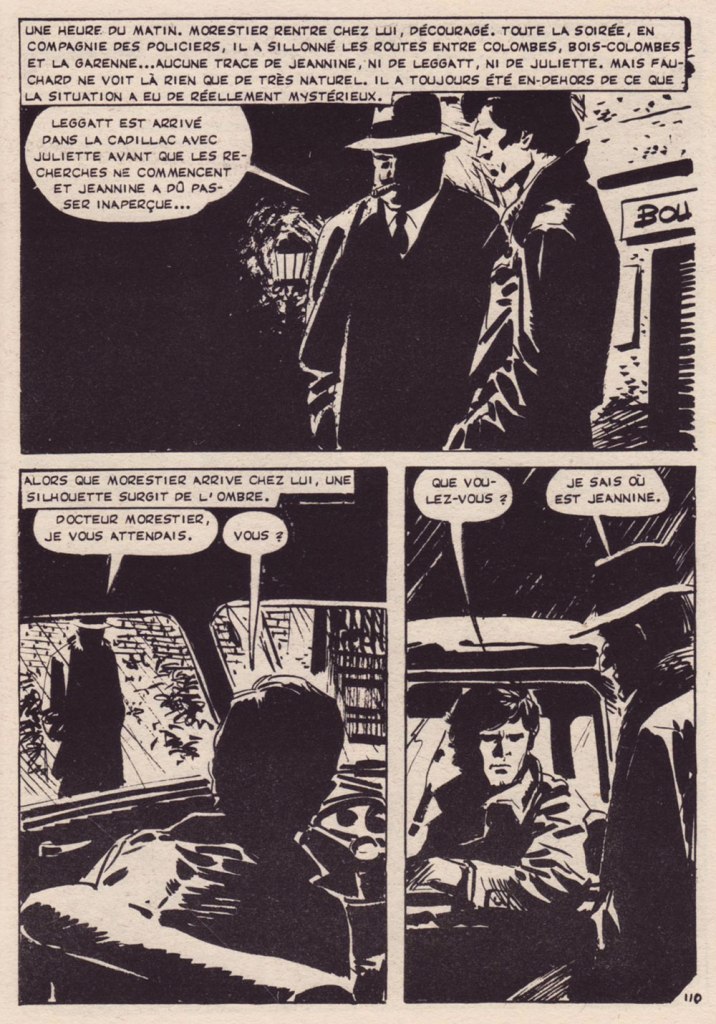
A handsome doctor thinks he can save the woman he loves. Randa sets up the usual scenario, all the better to kick the reader’s legs out from under him.
Le banquet des ténèbres — the bédé adaptation — saw print in Eclipso no. 30 (June 1973, Arédit). Amusingly, mycomicshop.com’s archivist describes Eclipso as ‘French publication reprinting comics from various Marvel properties.’ Well, not exactly. The title should clue you in: the anthology started out reprinting DC series such as Eclipso, Deadman, Mark Merlin, Challengers of the Unknown, Hawkman, Doom Patrol… while also dipping into Tower’s T.H.U.N.D.E.R. Agents, for instance. Marvel got stirred into the mix in the early 1970s, then came a period of French novel adaptations, then back to US comics, mostly from Marvel. The ride ended in 1983.

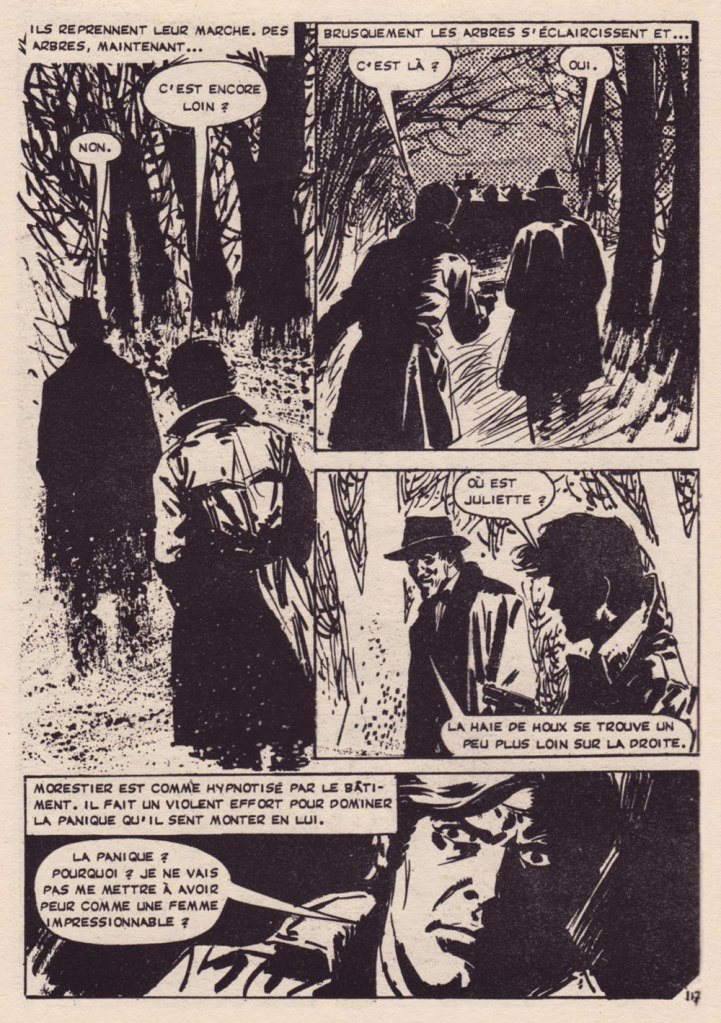
What fascinated me about Le banquet is its steady ambiguity between possible mental aberration, hypnotic suggestion, and the outright supernatural. This precarious balance — and slow-burning tension — is maintained right to the end, which is no mean feat. Is Leggatt just a regular madman, a consummate mesmerist, or a temporary, occasional shell for Old Nick? I’m reminded of a similar exploit accomplished by Arturo Pérez-Reverte in his 1993 novel El Club Dumas (The Club Dumas), wherein one didn’t know for certain whether there was anything actually uncanny going on… until the conclusion. Sadly, Roman Polanski fumbled his cinematic adaptation (as The Ninth Gate), starting with the absurd casting of Johnny Depp as the presumably intelligent book detective protagonist. When Polanski’s wife starts flying, the jig is up, I’m afraid.

-RG
Hallowe’en Countdown VII, Day 7

« Then hear this, and never forget it. Any fool with fast hands can take a tiger by the balls, but it takes a hero to keep on squeezing. » ― Stephen King, The Dark Half

A couple of years back, I was reading, through idle curiosity, a ranking of Stephen King’s books*. I came upon the article author’s précis for King’s 1993 novel The Dark Half:

« The premise is simple and ingenious: a literary author “kills” off the pseudonym whose popular fiction has been paying the bills, only for that alter ego to take murderous, corporeal form. Within the killing spree that ensues, King offers some profound observations about the schism between high art and popular culture, while also exposing his own worries about legacy. » I like King’s perhaps a bit too cute allusion to Donald Westlake’s troubles with his better-selling, pulpier pseudonym Richard Stark — The Dark Half’s antagonist is named George Stark.

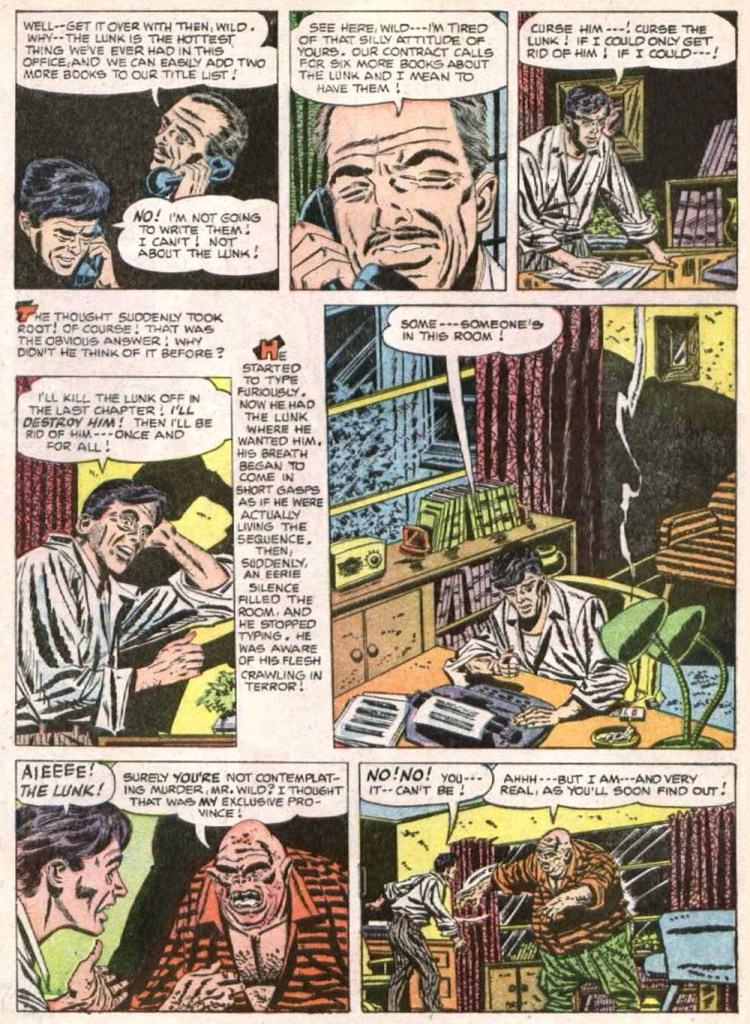
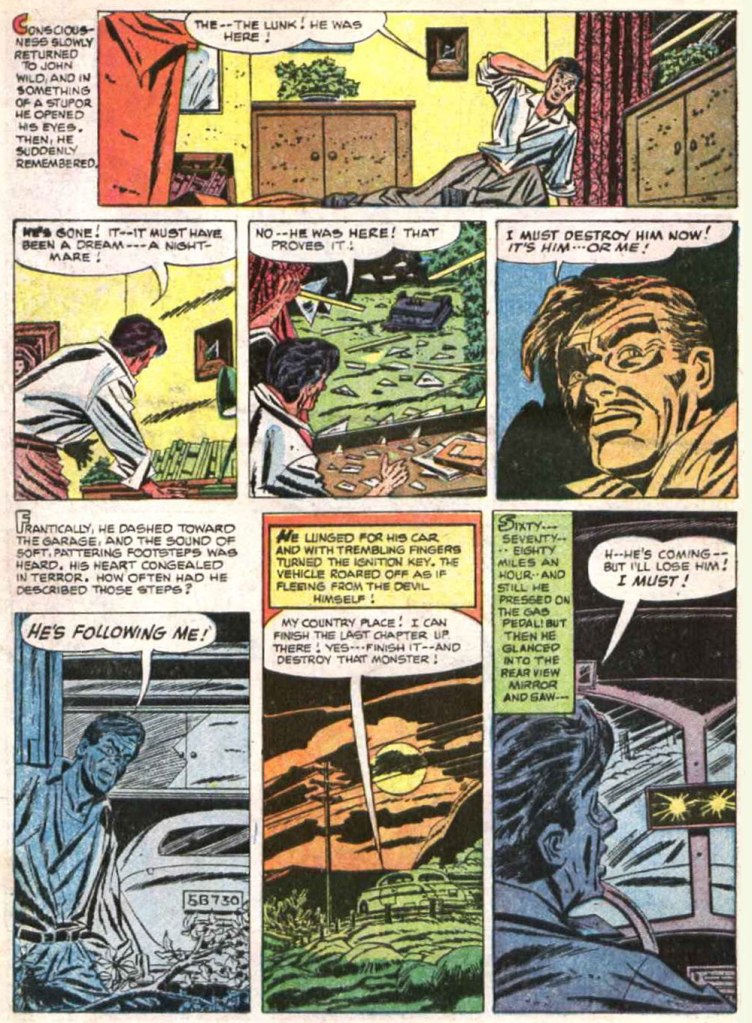
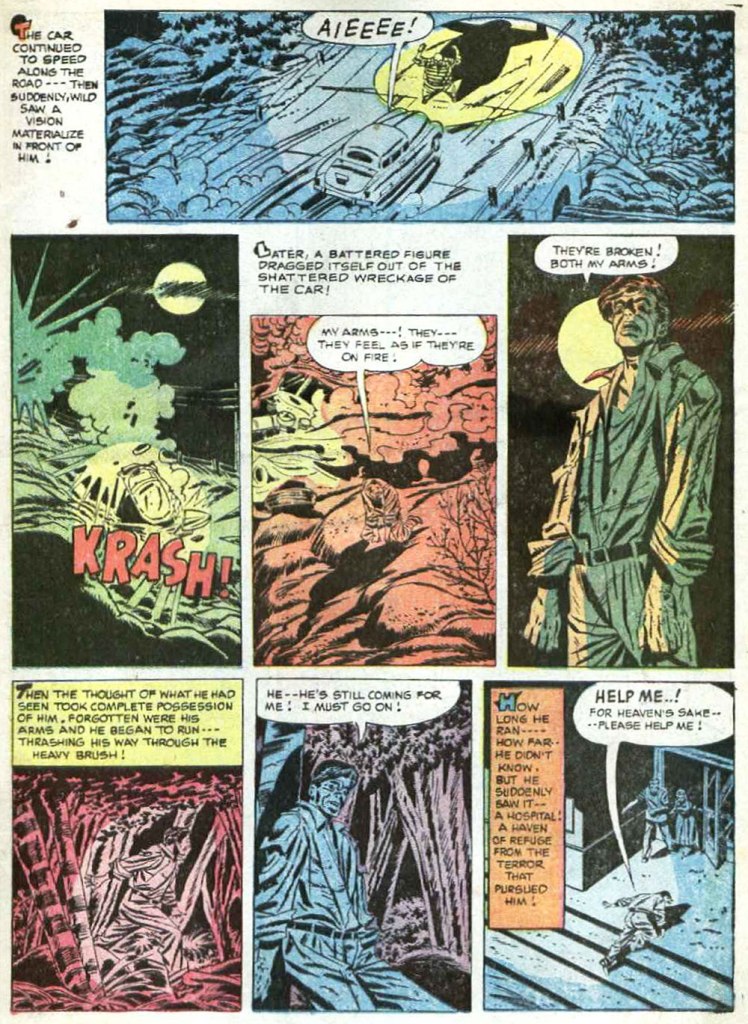
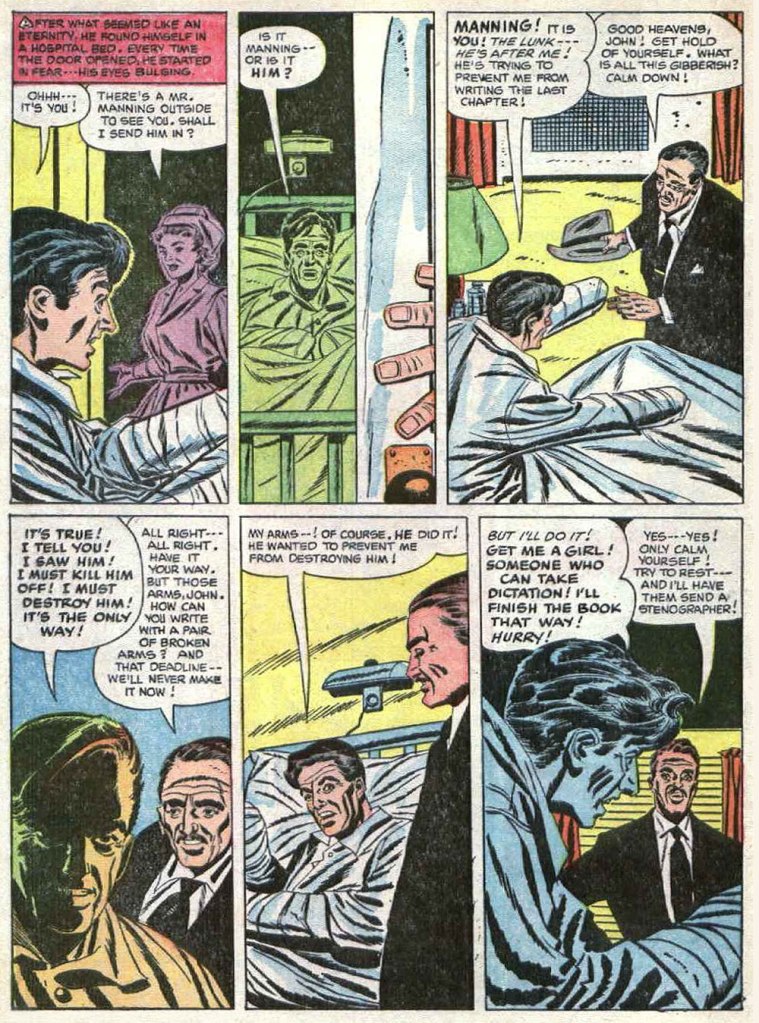
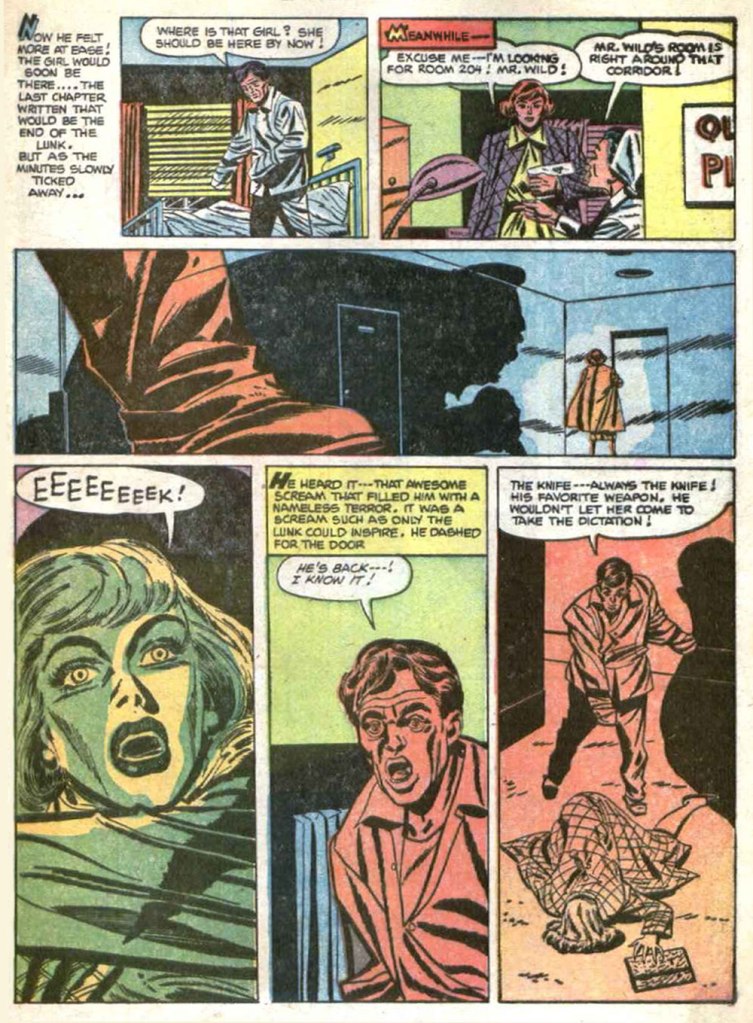
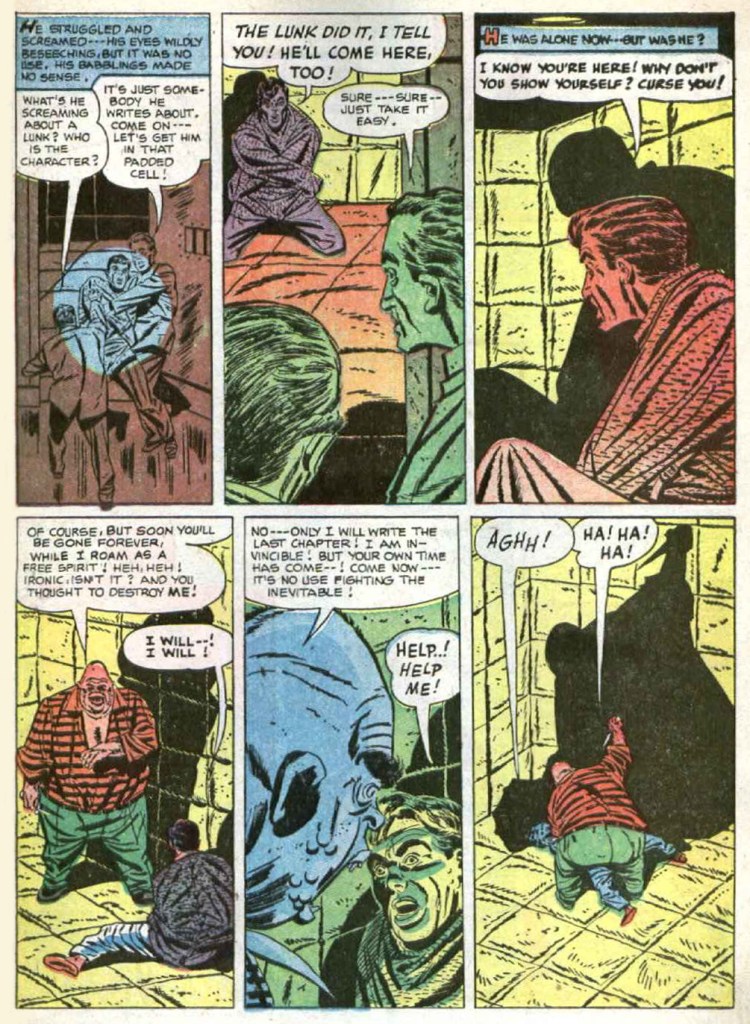
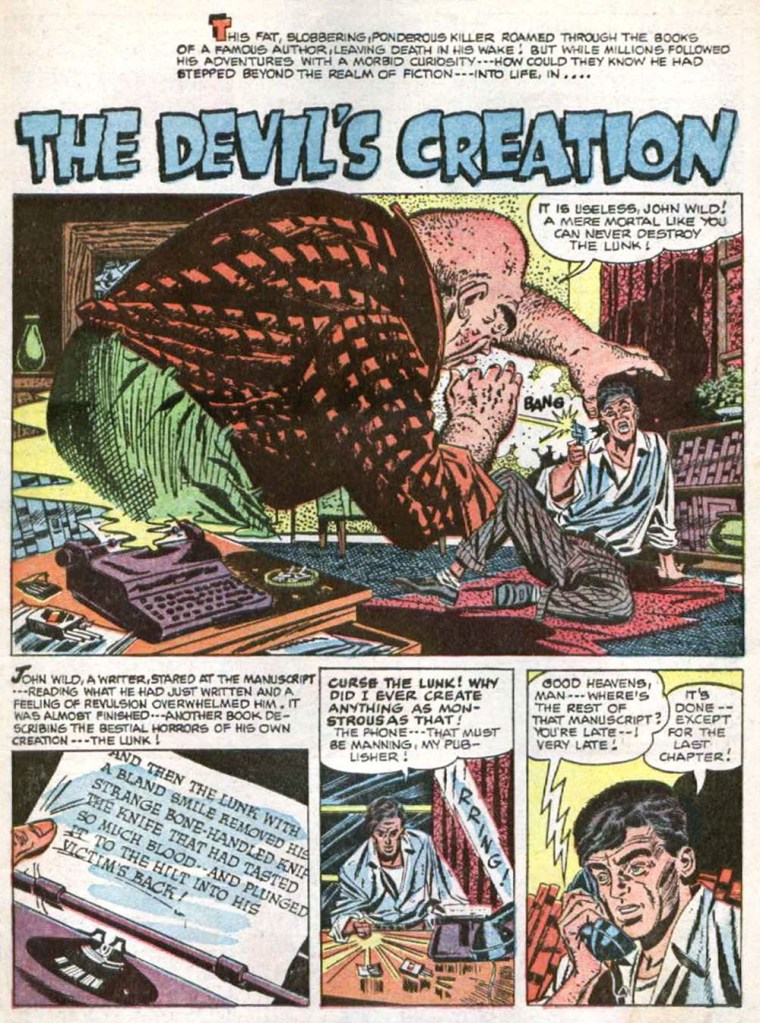
Anyway, that essential premise reminded me vividly of a harrowing comic book story I’d encountered as a child. Here it is — poorly reproduced, I’m afraid — and I’ll provide a bit of context afterwards.

The Devil’s Creation originally saw print in Beware! Terror Tales no. 2 (July 1952, Fawcett). Scripter unknown, art by Mike Sekowsky (1923-1989).
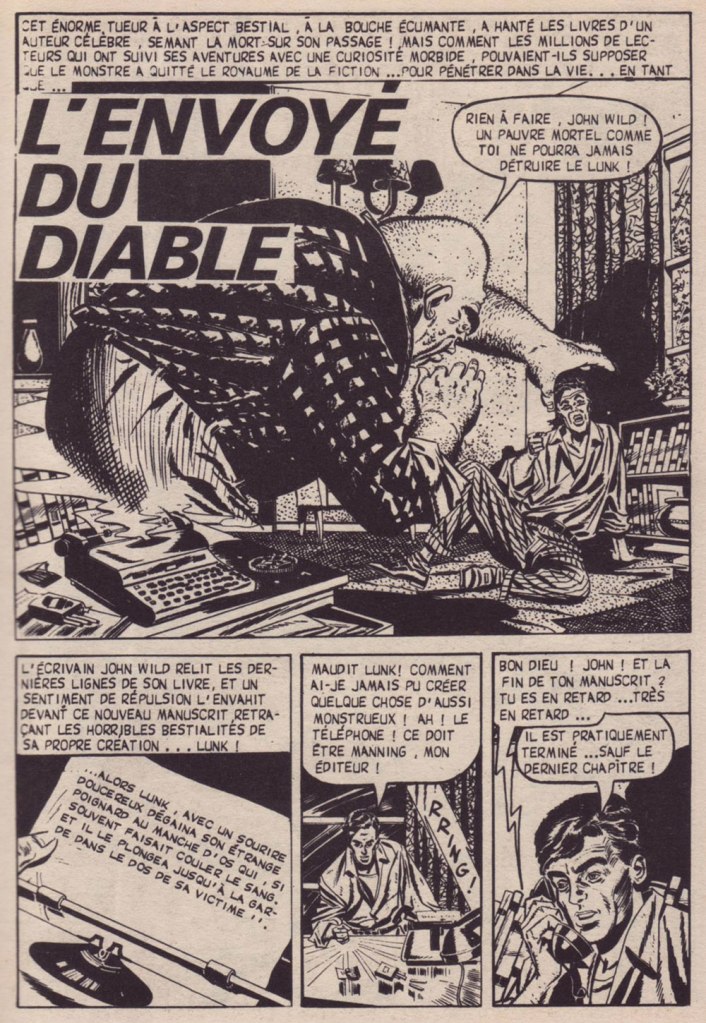
On a small town kid’s budget, some US comic books were highly unlikely to turn up on my local spinner rack. Besides, I didn’t even know English yet. But these French digests (162 pages for 35 cents!) could be a godsend. This one came out slightly before my time, but I somehow landed a second-hand copy. This is my dog-eared Eclipso no. 9 (Oct.-Dec. 1970, Arédit); I was, within its pages, introduced to — besides Eclipso — Deadman, The Spectre, The Doom Patrol, The T.H.U.N.D.E.R. Agents and Mark Merlin.

Amid all this fine, but sanitised Silver Age fare, here was one short story that sharply stood out by its merciless brutality. I’m still mystified at how this seemingly random story, which hasn’t even been reprinted once in North America, so incongruously landed in this collection. Amusingly, Sekowsky appears elsewhere in the issue, pencilling the light-hearted A Day in the Life of Dynamo (from Dynamo no. 1, Aug. 1966, Tower). Say what you will, the man was versatile.

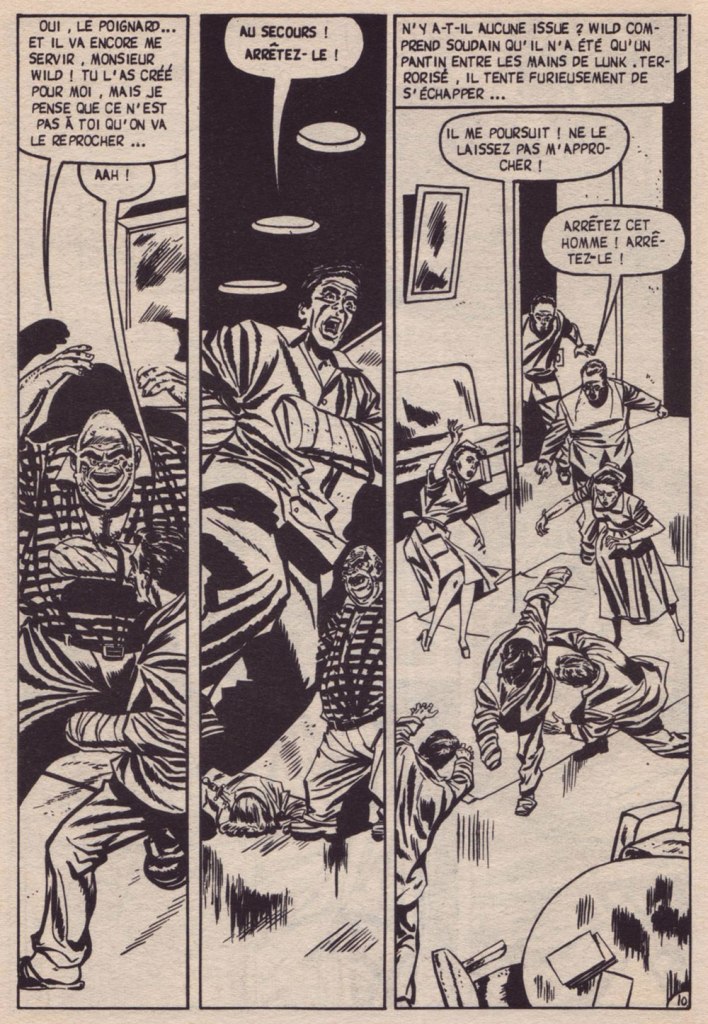
Notice how they took away his gun? Censorship was pretty strict in France when it came to publications for youth.
In reformatting stories for a different size and ratio, this publisher’s efforts were often pretty dismal; this, however, was an exception. I daresay the pacing was even improved. You simply never know!

-RG

*Not having made it through much of his oeuvre, my favourite King is the non-fiction Danse Macabre (ranked his 51st best book). Fun fact: ill-advisely, the French have retitled King’s famous short story collection Night Shift (ranked no. 13)… Danse macabre. The real DM was retitled Anatomie de l’horreur (‘Anatomy of Horror’). Now I’m sure that didn’t confuse anyone.