Will Eisner’s The Spirit at Harvey and…

« It was long past midnight on a hot, wet June night many years ago… Central City lay choking for breath in an eerie fog… »

In this, part three of our chronicle following as we can the meandering and sometimes mystifying odyssey of Will Eisner’s The Spirit, we reach the most outré segments of the former Denny Colt’s road.

In a unique twist, The Spirit’s next residence, nearly a decade after his Fiction House run, had nothing at all to do with Will Eisner… in terms of securing his assent, that is.

It was down to the fabulously sketchy Israel Waldman, one of those fringe-dwelling characters who made the comics industry such a colourful snake pit. To quote the Grand Comics Database: « I.W. Publications (1958-1964) was part of I.W. Enterprises, and named for the company’s owner, Israel Waldman. Reportedly, Waldman came into possession of a printing company and among the assets were the production materials for several hundred comic books previously published by various publishers as well as a limited amount of previously unpublished material. Waldman equated possession of production materials as the right to reprint and I.W. became notable for publishing unauthorized reprints of other companies’ comics, often with new covers, as Waldman’s windfall did not often include the production materials for covers. The later half of the company’s existence, it published comics under the Super Comics name. Usually these companies were out of business, but not always. »
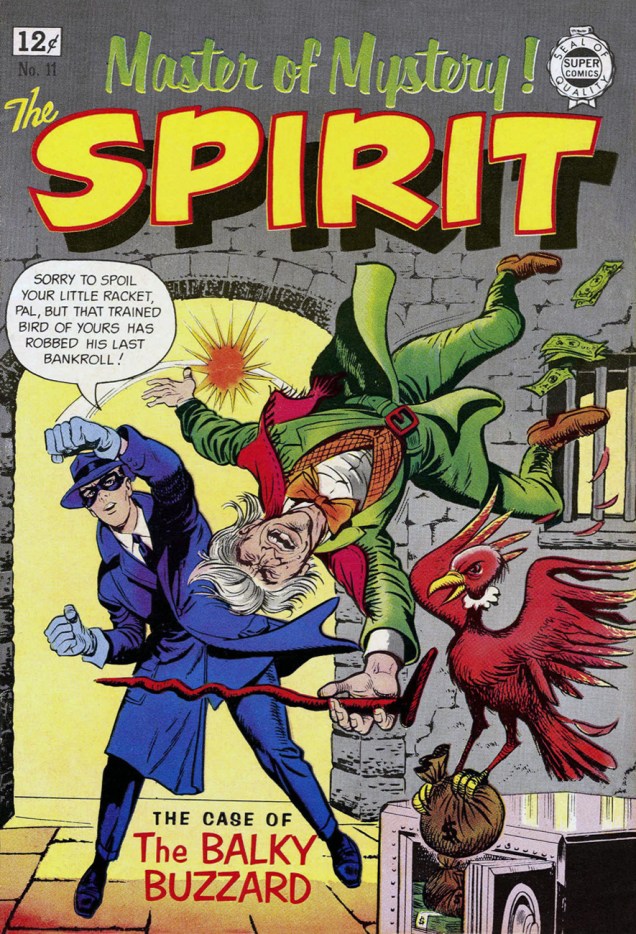
IWThe-Spirit11A
This is The Spirit no. 11 (1963), featuring The Man Who Killed The Spirit (Mar. 24, 1946), cover-featured The Case of the Balky Buzzard (Apr. 21, 1946), Carrion’s Rock (May 19, 1946), all scripted by Eisner, as well as Honeybun and Flatfoot Burns shorts. Cover by Joe Simon (“Joe, did you even read the story you’re depicting?“). This one was well worth one’s hard-earned twelve pennies. Read it here.
IWThe-Spirit12A
This is The Spirit no. 12 (1964), featuring, this time, a trio of WWII-era Spirit stories scripted by Manly Wade Wellman and Bill Woolfolk and illustrated by Lou Fine, rounded off with a pair of Flatfoot Burns shorts by Al Stahl . Cover again by Joe Simon. Read it here.

If memory serves, Waldman’s comics craftily bypassed the Comics Code (another exception!) and the newsstands, being exclusively sold in sealed bags of three in bargain-basement department stores. To bait the hook, Waldman paid top dollar for new cover artwork, approaching established pros like Ross Andru (who actually delivered some fun stuff, unlike his unforgivably atrocious turn as DC’s main cover artist in the late 1970s), John Severin, Jack Abel, and in these two cases, Jacob Kurtzberg‘s old partner, Joe Simon.

Unsurprisingly, Waldman skimped on all other materials, particularly the paper his comics were printed on, which means that I.W./Super Comics are pretty hard to come by these days in any kind of decent state, so they’re ironically pricey.

A few years later, Eisner struck a deal with another rascal (albeit one with cleaner fingernails), Alfred Harvey of Harvey Comics, Stan Lee‘s only credible competition in the credit-usurping, I created-the-Universe stakes. Again, two issues, but this time with some new Eisner material, including origin stories for The Spirit (his third, but definitive one), and his arch-nemesis Zitzbath Zark, which you may know as purple glove enthusiast The Octopus.

HarveySpirit1A
Harvey’s The Spirit no. 1 (Oct. 1966), featuring the new Origin of the Spirit by Eisner, and classics Lorelei Rox (Sept. 19, 1948), Two Lives (Dec. 12, 1948), Agent Cosmek/Visitor (Feb. 13, 1949), The Story of Rat-Tat the Toy Machine Gun (Sept. 4, 1949), Ten Minutes (Sept. 11, 1949), Thorne Strand (Jan. 23, 1949), Gerhard Shnobble (Sept. 5, 1948), all scripted by Eisner, save Ten Minutes, which hails from the mind of Jules Feiffer.
Spirit2A
Harvey’s The Spirit no. 2 (March, 1967) features the brand-new Octopus: The Life Story of the King of Crime and 2-pager The Spirit Lab, plus a generous helping of fine oldies, namely Plaster of Paris (Nov. 7, 1948), The Deadly Comic Book (Feb. 27, 1949), Rudy the Barber (Oct. 22, 1950), The Story of Sam, the Saucer That Wanted to Fly (Sept. 17, 1950), Sam Chapparell (Oct. 10, 1948), La Cucaracha (Nov. 19, 1950), The Halloween Spirit of 1948–Ellen Meets Hazel (Oct. 31, 1948), all scripted by Eisner… the book wraps up with a preview of the next issue, which never saw print. And so it goes…

Mr. Eisner then finally had the good fortune to run into an honest man, who would prove in time to be his most steadfast ally: Mr. Denis Kitchen. Their first collaborations were a bit tentative, but quite sympathiques, with Eisner kind of slouching towards the Underground, his creation even cover-featured on Kitchen’s long-running humour anthology Snarf.
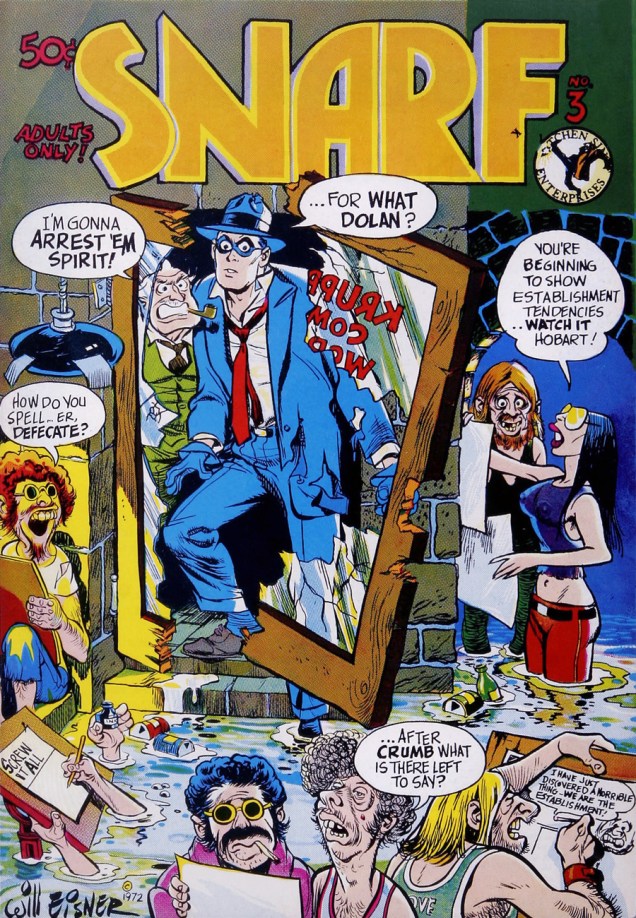
Snarf3EisnerA
This is Kitchen Sink Enterprises’ Snarf no. 3 (Nov. 1972), featuring an original Eisner cover.
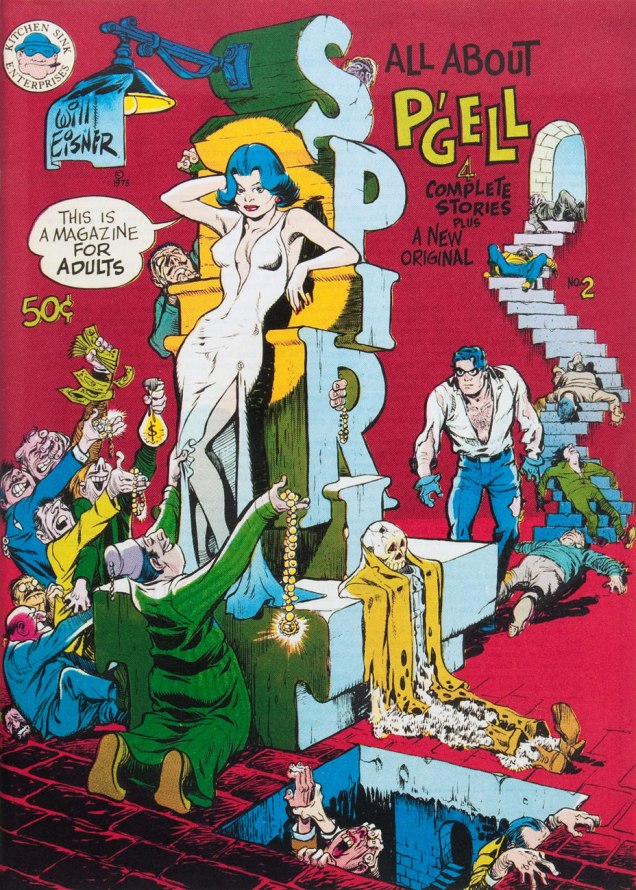
SpiritKitchenSink1A
Another two-issue run! Kitchen Sink’s The Spirit no. 1 (Jan. 1973), featuring a new cover by Eisner, and precious relics Max Scarr’s Map (Apr. 14, 1946), Caramba (Nov. 10, 1946), Return to Caramba (Nov. 17, 1946), The Rubber Band (June 23, 1946), plus a few brand-new short pieces.
SpiritKitchenSink2A
Kitchen Sink’s The Spirit no. 2 (Nov. 1973), featuring a new Eisner cover, an original four-pager, The Capistrano Jewels, and, as boasts the cover, all about P’Gell, with Meet P’Gell (Oct. 6, 1946), The School for Girls?? (Jan. 19, 1947), Competition (Aug. 3, 1947) and The Duce’s Locket (May 25, 1947).

Next time out: some interesting times with Warren.

-RG
Hallowe’en Countdown II, Day 23

« It was the town dandy! That spiffy cigar-store indian! Within the impact of a second I knew what I had to do! »  – Ron gets it wrong.

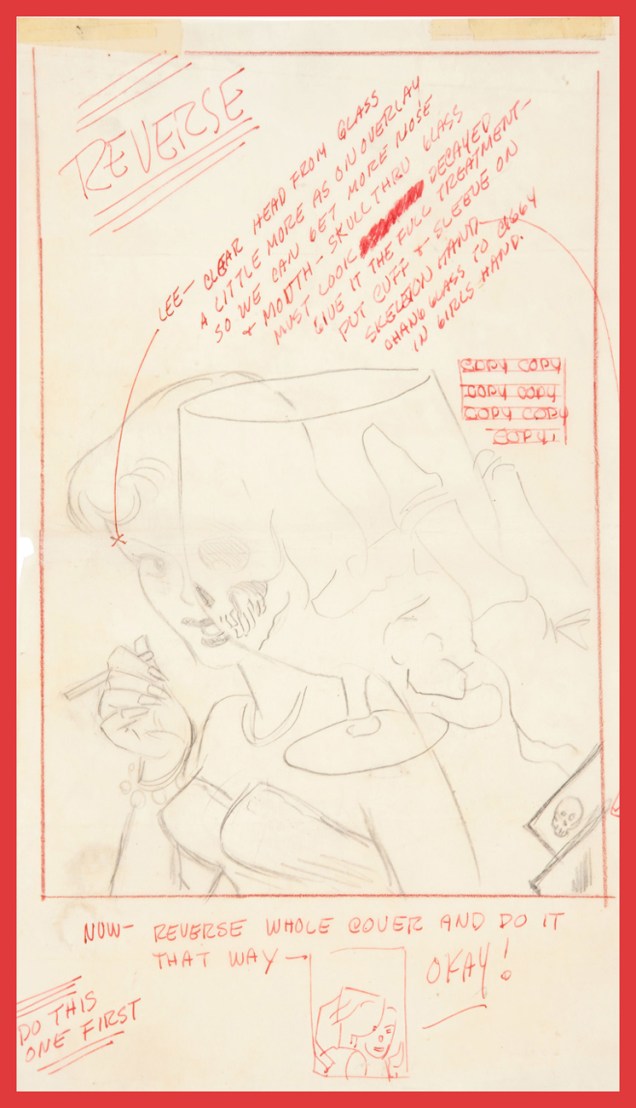
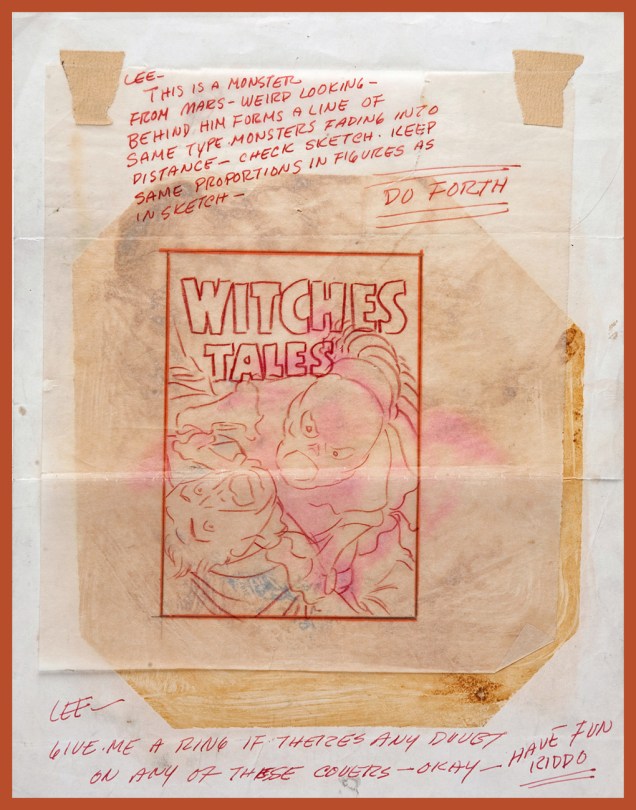
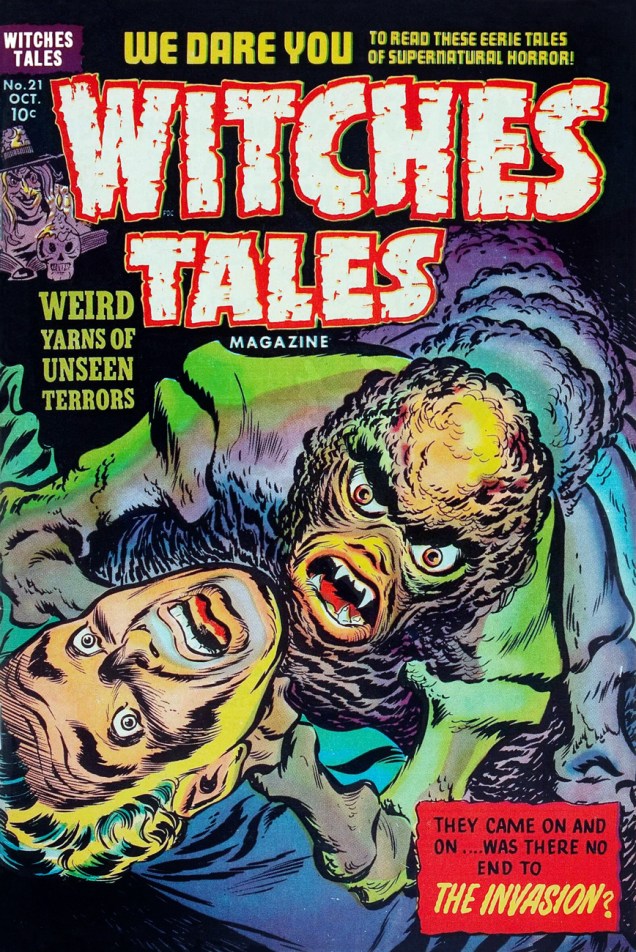
It’s become a historical footnote that, before fully settling into their (for a time) winning formula of lighthearted, cartoony monomania with Casper, Richie Rich, Little Dot and their ilk, Harvey Comics had published, pre-Code, some of the most, er… transgressive horror comics in the field. And before he settled down to designing and pencilling the lion’s share of Harvey Comics‘ admittedly inventive and arresting covers, art director Warren Kremer had fulfilled many of the same in-house duties in the more daring and diverse pre-Code years. A remarkably inventive and versatile artist, Kremer’s true worth has historically been obscured by his retiring, behind-the-scenes status, as well as the Harvey family’s plantation mentality. Today, let’s take a peek at the nuts and bolts of his collaborative partnership with cover artist Lee Elias, who would go on to become one of DC’s most straight-laced artists (though his talent remained undimmed.) It would seem, and it’s quite understandable, that a lot of artists who’d merrily produced horror comics in the early 1950s got burned by the ensuing censorious witch hunt / backlash… and became quite timid thereafter.

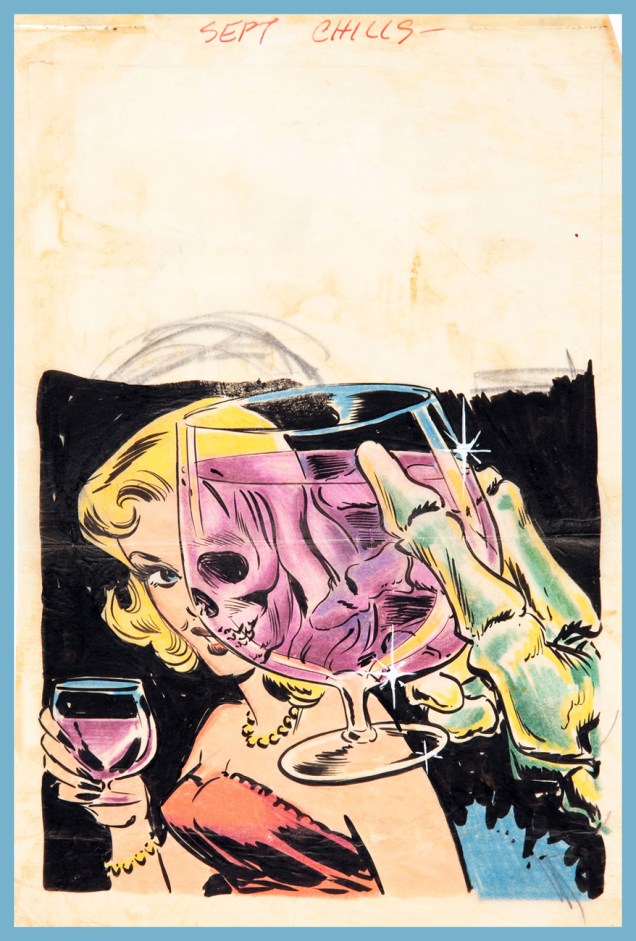
ChamberChills19SketchA
Warren Kremer’s original cover sketch and colour guide.
CoC19InstructionsA
… and his instructions to the final artist, in this case Lee Elias.
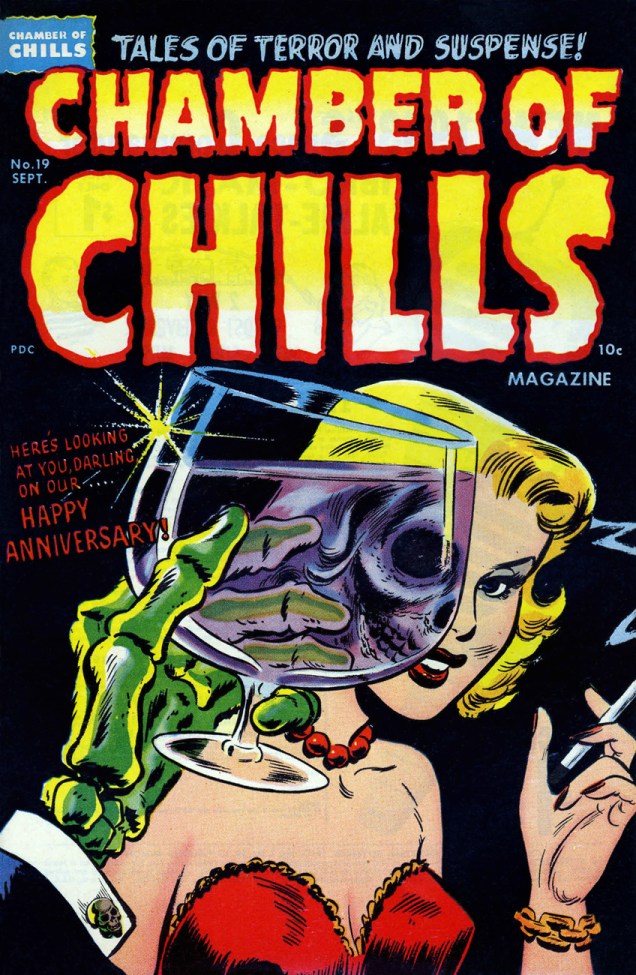
ChamberChills19A
As it appeared in print, this is Chamber of Chills Magazine no. 19 (Sept. 1953.) Marvel borrowed the title in the 1970s… Harvey clearly had no further use for it.

Another one? But of course!

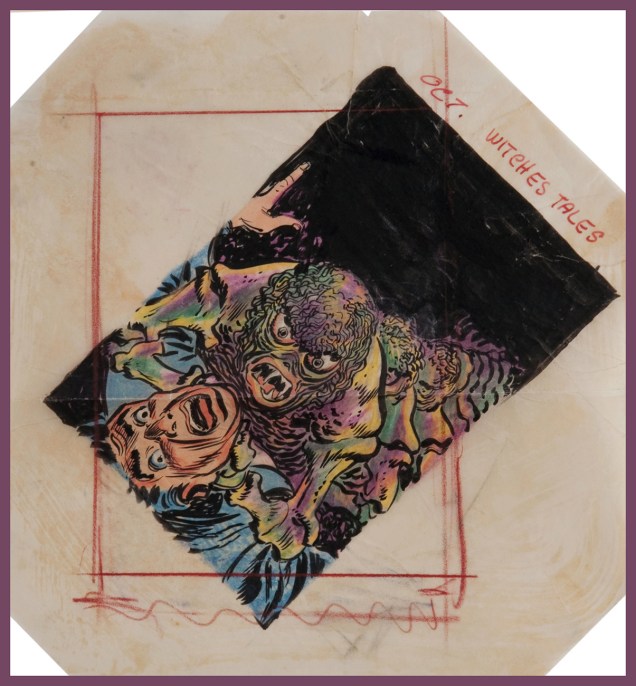
CoC19SketchA
Kremer was evidently a believer in the « tilt the drawing to make it more dynamic » rule of layout (as DC’s Carmine Infantino notoriously was)
CoC21InstructionsA
Kremer to Elias, again. An illustrator is quite blessed indeed when he gets to work with such a talented, insightful and friendly art director.
WitchesTales21A
Elias’ finished version, as it appeared on the stands. This is Witches’ Tales Magazine no. 21 (Oct. 1953).

-RG

Hallowe’en Countdown, Day 14

« That should teach you not to tangle with a tuff little ghost! »

Amongst Harvey Comics’ cast of monomaniacal characters, Spooky the Tuff Little Ghost’s propensity for trying to scare folks out of their skin with a hearty « Boo! » seemed sanest. After all, that’s what ghosts are s’posed to do, even if they’re from Brooklyn.

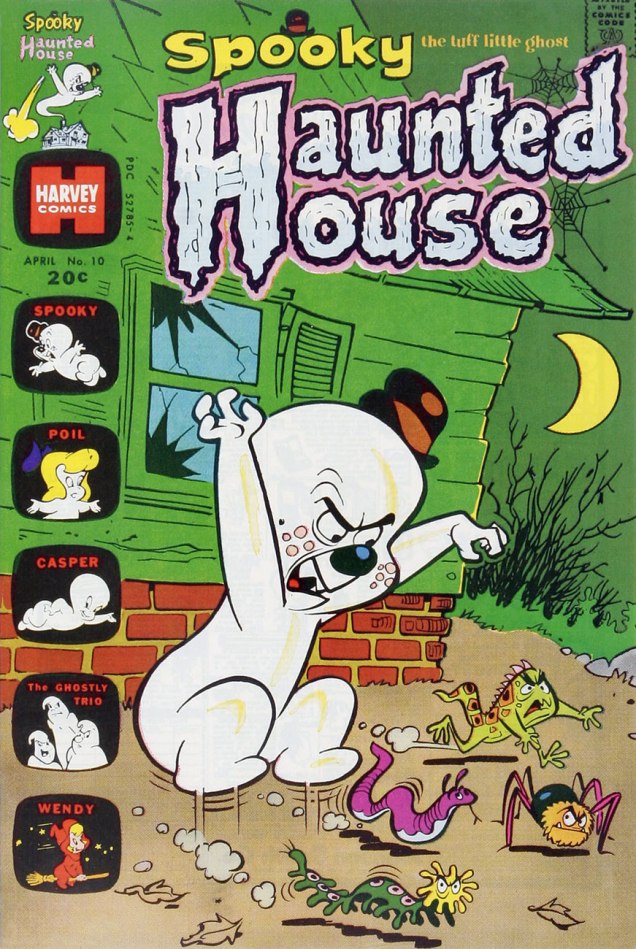
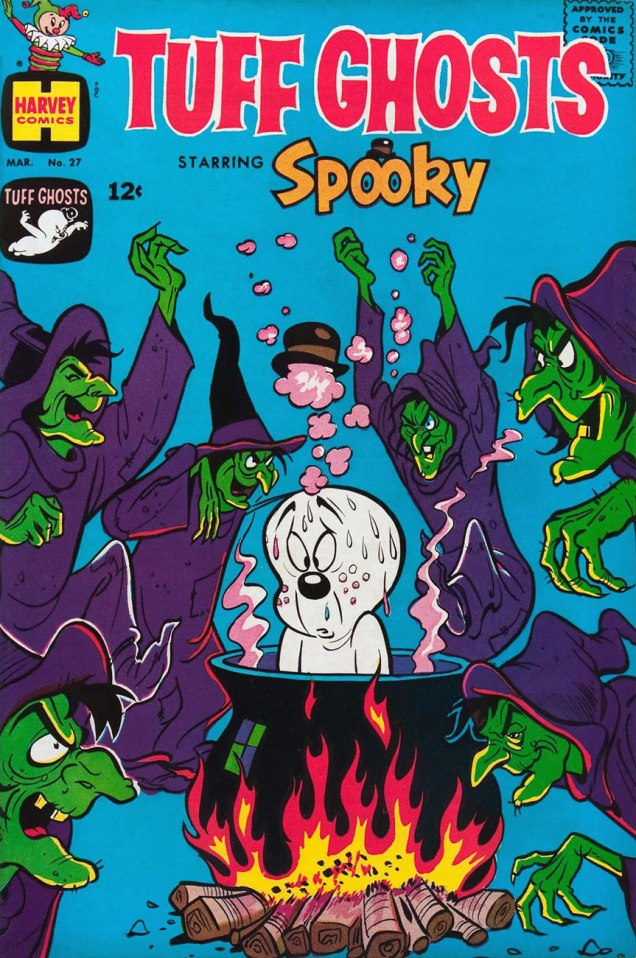
Here’s a tiny sample of some of Spooky’s spookiest covers, from the incredibly fertile mind and pen of unsung conceptual genius Warren Kremer.

Spooky77A
Spooky no. 77 (Dec. 1963, Harvey). Say, is that Mrs. Rich getting hit up for some treats?
SpookyHauntedHouse10A
Spooky Haunted House no. 10 (Apr. 1974, Harvey)
SpookyHauntedHouse12A
Spooky Haunted House no. 12 (Aug. 1974, Harvey)
SpookyHauntedHouse13A
Spooky Haunted House no. 13 (Oct. 1974, Harvey)
TuffGhosts37A
Tuff Ghosts Starring Spooky no. 27 (March 1967, Harvey)

As reading material, the Harvey books were mush for the mind, but they sure had purty covers. Note how Harvey was the only comics company that treated the Comics Code Authority stamp with such contempt: if it doesn’t get half cropped off, it’s coloured as to be barely visible. The damn thing, even at its smallest, *was* a visual blight. Bless that art director! Then came barcodes… and the battle wasn’t even worth waging anymore.

– RG