Panning the murky old print stream for the odd glimmering nugget
Hallowe’en Countdown 2021
When October arrives, we’re ready. For, this fifth time, Who’s Out There? will torment its faithful handful with manifold manifestations of the seasonal mood… in various shades from sombre to bright, but always true to the pumpkin spirit. At least that’s the plan.
« We see light, not dark. But it is in the dark that we feel goblins and ghosts. » — Rex Brandt
The ever-creative Tom Eaton‘s Oliver Cool (1975-79) always reserved a special treat for Hallowe’en. In past countdowns, I’ve shared the first (1975) and second (1976) entries devoted to the beloved occasion, and here is the final pair.
From Young World Volume 14 no. 8 (Oct. 1977, The Saturday Evening Post Company).
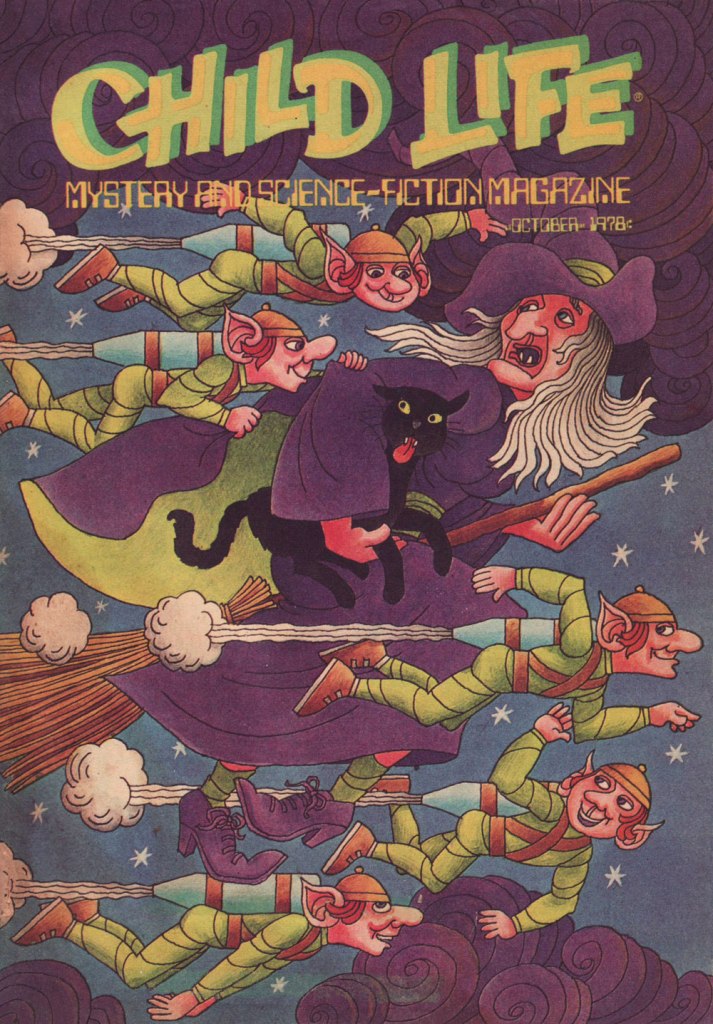
Eaton’s Fizz & Farra In the Year 2250 strip ran concurrently in Young World’s sister publication, Child Life. This seasonal cover by Arthur Wallower was simply too good not to include.
From Young World Volume 15 no. 8 (Oct. 1978, The Saturday Evening Post Company).
As a bonus, here’s one item some of you monster kids may fondly remember: Monster Stand-Up Greeting Cards (1980, Scholastic). Pricey these days, from the look of it.
« Ghost stories … tell us about things that lie hidden within all of us, and which lurk outside all around us. » — Susan Hill
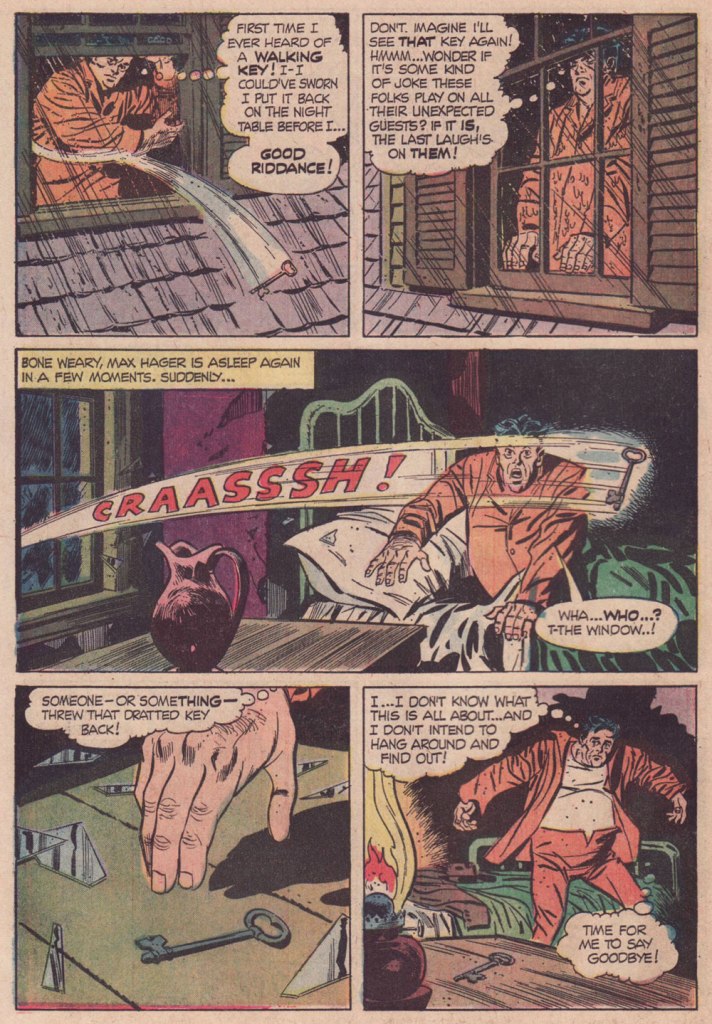
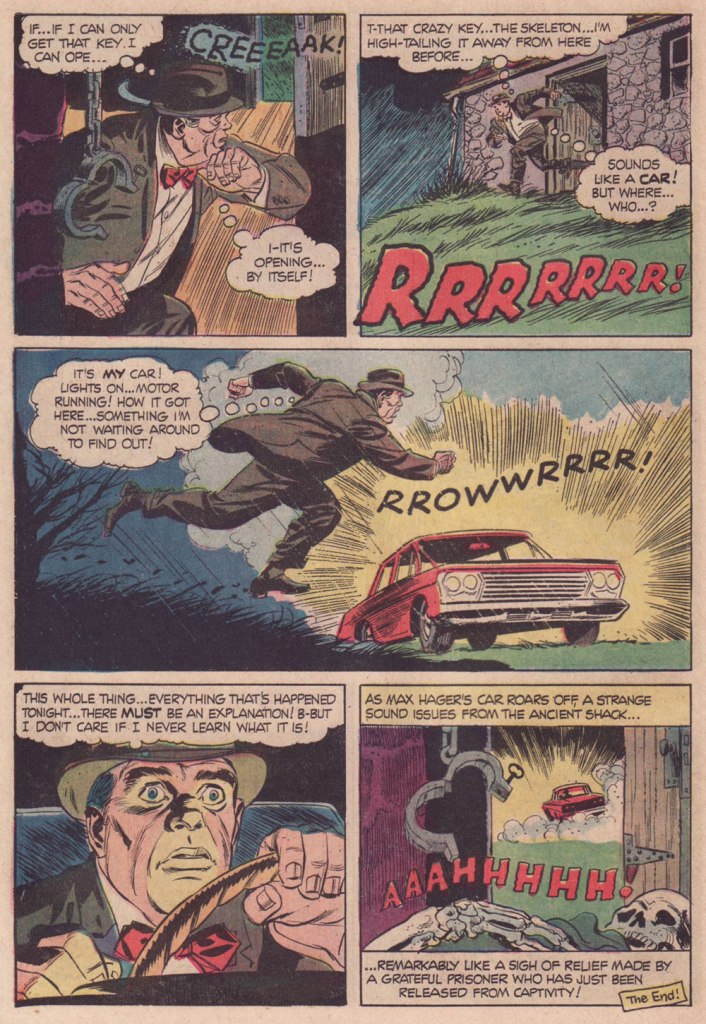
We’ve once before turned our attention upon Dell’s Ghost Stories, an anthology title with such an incredible first issue (written and directed by John Stanley) that all the subsequent ones whither in the long shadow it casts. In recent years, I’ve somewhat softened my stance on these sequels, taking into account that nothing could measure up to Stanley’s work on numero uno — and accordingly judging them on their own merits.
As a kid, I didn’t think too highly of Frank Springer (1929-2009), being primarily familiar with his inks over Frank Robbins on The Invaders (too sloppy, and no substitute for Robbins inking himself, which never happened at Marvel anyhow). Down the line, I ran into some of his earlier work (Phoebe Zeit-Geist, The Secret Six, The National Lampoon, Dial H for Hero and sundry items for Dell) and grew to appreciate his strengths.
Now, Ghost stories was interesting as a ‘horror’ (in the very limited Silver Age/Comics Code in full force sense) anthology, in that the vast majority of the stories were, after that peerless first issue, the work of one single artist (Gerald McCann, after contributing a couple of page to number one, handled issues 2-5, with a couple of filler pages thereafter, then Springer took over for 6-20, the rest of the run consisting of reprints, with the unexpected exception of no. 35).
Here then is what’s likely my favourite Springer Ghost Story: A Room with a Dreadful Secret.
This is Ghost Stories no. 14 (June 1966, Dell). Cover by Springer.
« I don’t know what the hell I published. I never read the things. » — Stanley P. Morse
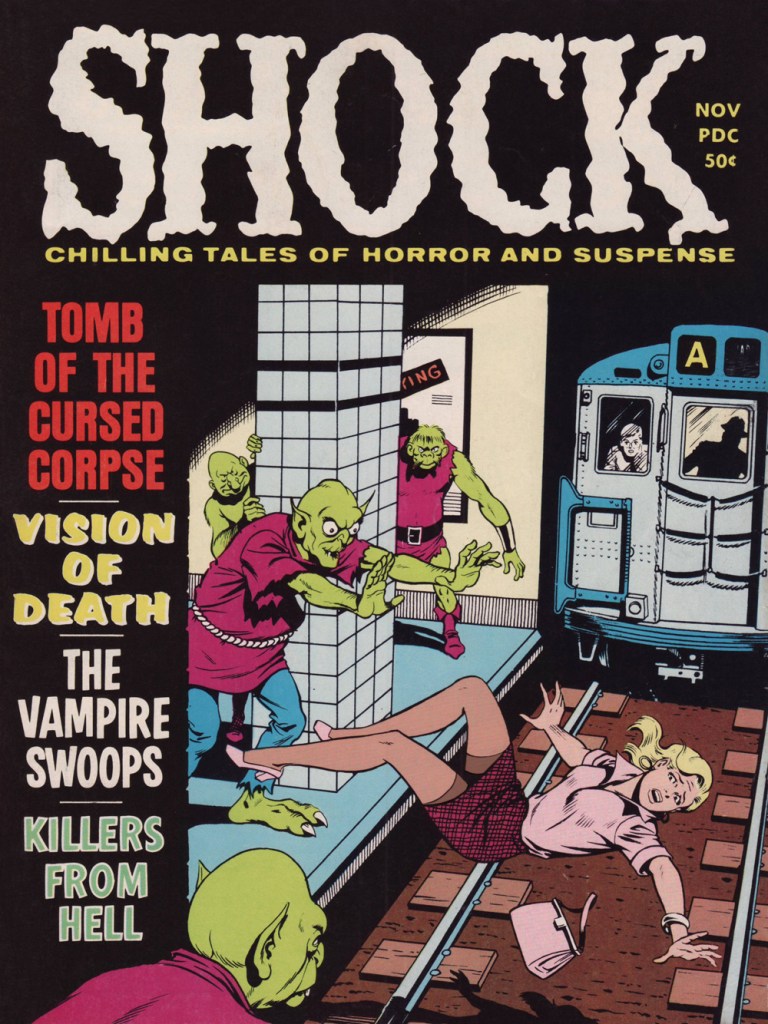
In the sinister wake of Warren Publishing‘s success with Creepy, Eerie and Vampirella, old-school fly-by-night 1950s comics publisher Stanley P. Morse (Aragon Magazines, Gillmor Magazines, Medal Comics, Media Publications, S. P. M. Publications, Stanmor Publications, and Timor Publications…) dusted off some of his old pre-Code chillers in the late 1960s and early 1970s in black and white magazines such as Shock (15 issues), Chilling Tales of Horror (11 issues), Ghoul Tales (5 issues) and Stark Terror (5 issues). It certainly wasn’t all junk: after all, Morse had published Weird Tales of the Future and Mister Mystery, with their Basil Wolverton and Bernard Baily classics…
Unlike Eerie Publications’ grey-toned and blood-and-gore-ified reprints, these are, as far as I know, unretouched, not to mention decently printed.
This is Shock Vol. 2 no. 5 (no. 10, November, 1970, Stanley Morse). Edited by Theodore S. Hecht.
Maybe it’s just me, but isn’t Kurt Schaffenberger just about the unlikeliest pick of cover artist for a pre-code horror anthology? Sure, he fit in nicely with ACG’s gentle moral fable aesthetic, but aren’t you just expecting the Man of Steel or The Big Red Cheese to swiftly sweep in, catching the damsel-in-distress before the A Train smooshes her?
To wit: one of Kurt’s fun ACG covers, this is Unknown Worlds no. 43 (Oct.-Nov. 1965, ACG).
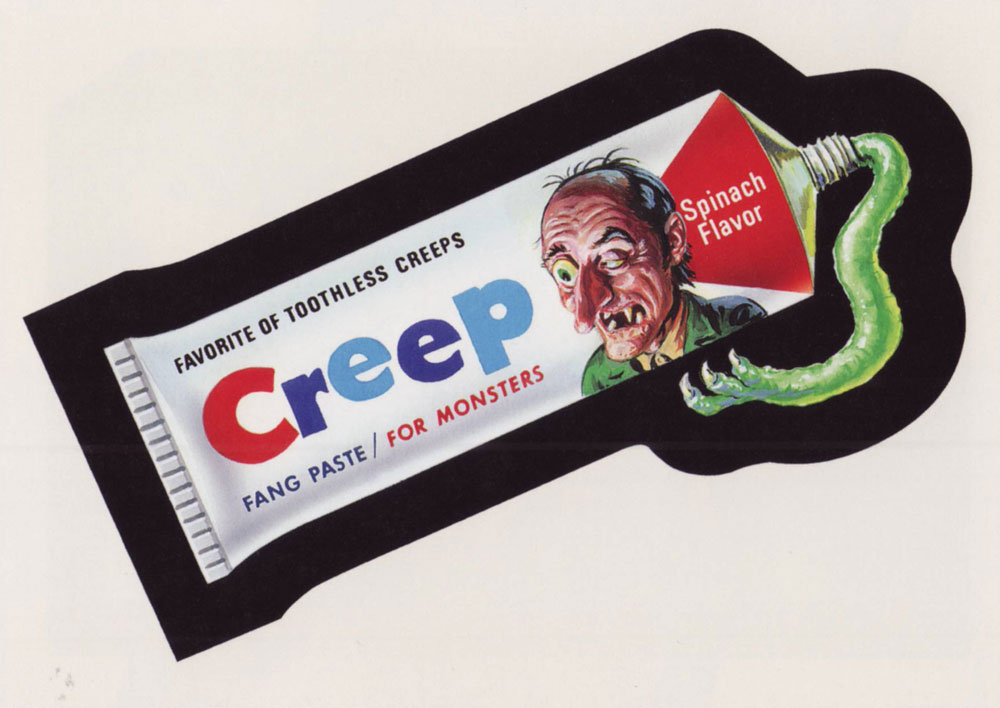
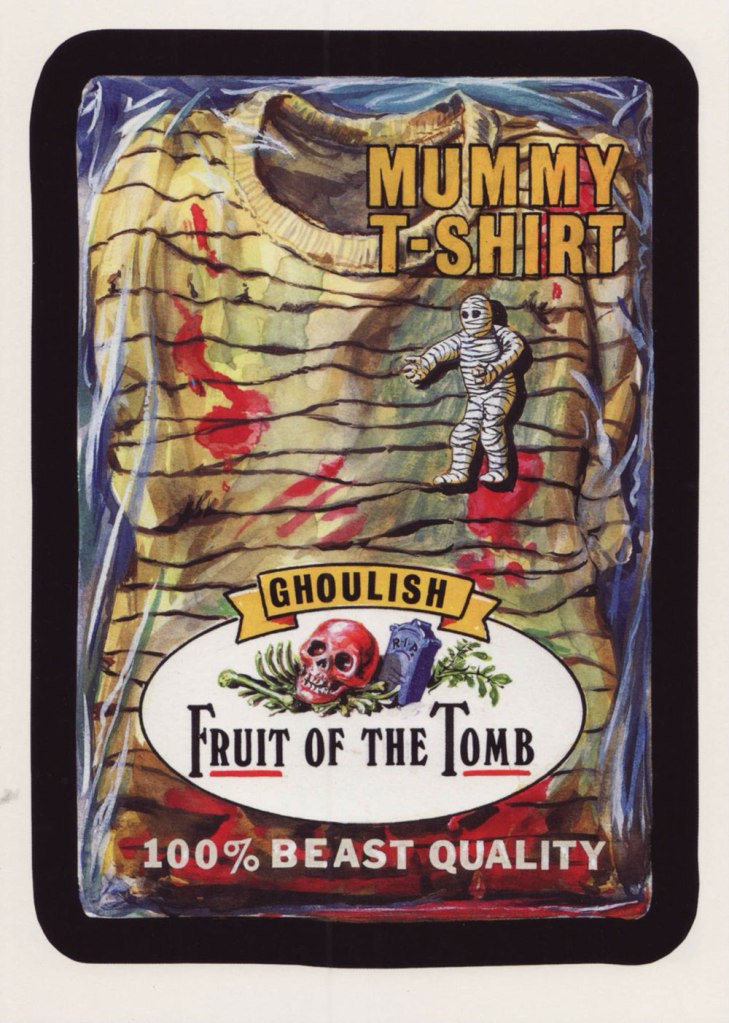
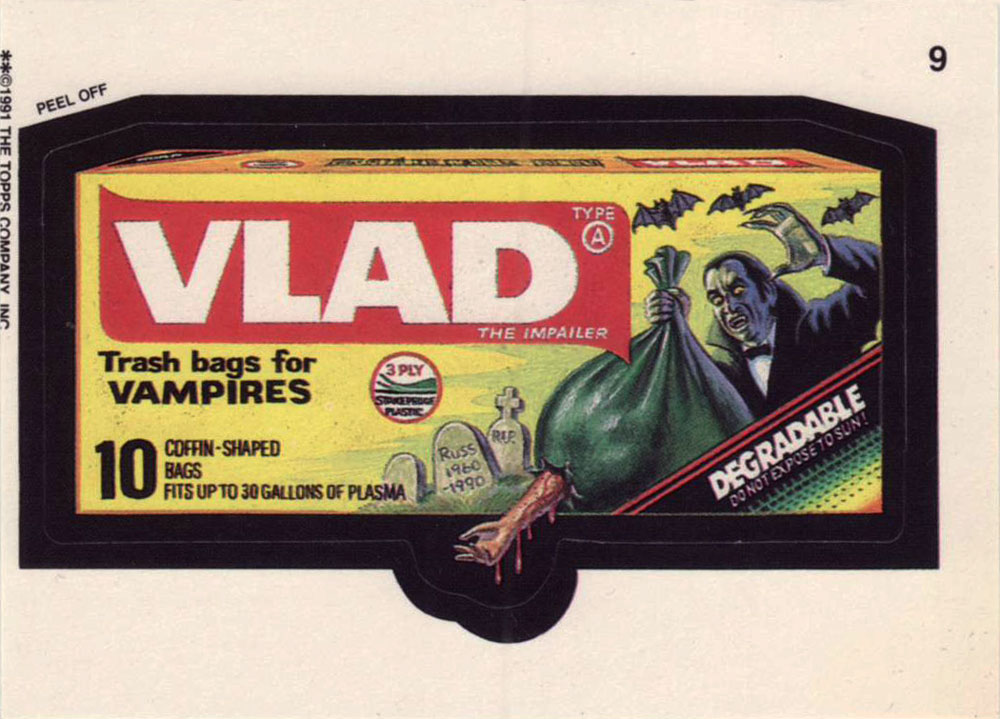
« So, you see the little snot on the right side, move it two inches to the left and add a little bit of green gleam to it. » — Mark Newgarden, doing some art direction
If this one looks sharper than you’d expect, it’s because it’s shot from a larger version of the Wacky card that Norman Saunders (re)painted for Topps’ Wacky Posters series, circa 1973.
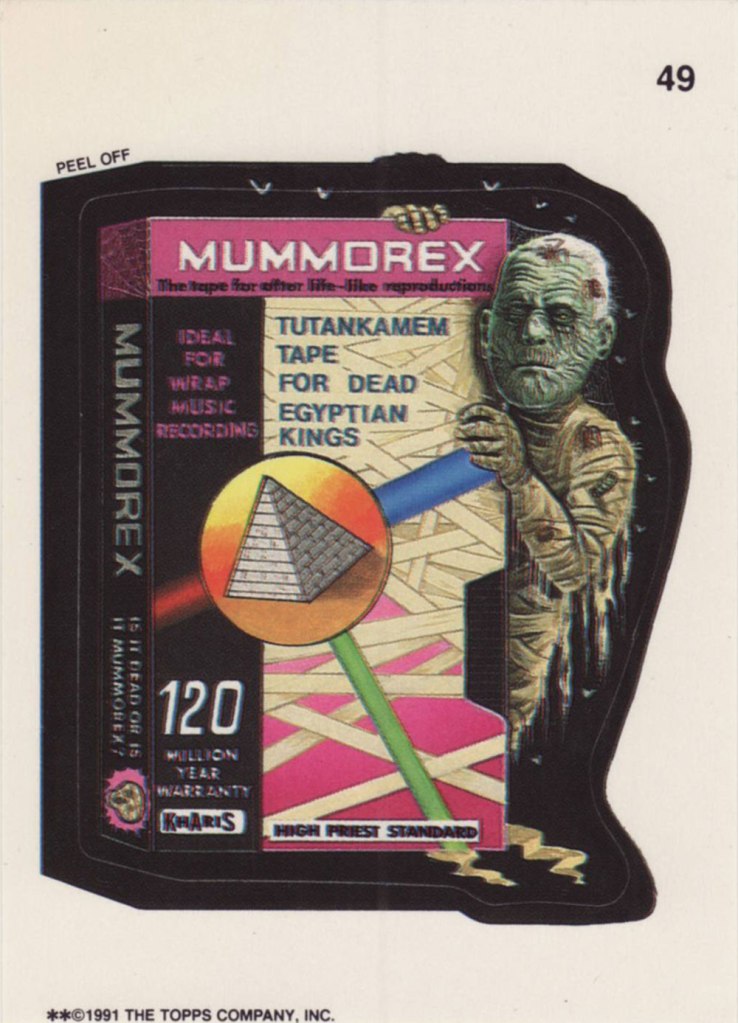
Ladies and gentlemen, Drew Friedman! « In 1991, I was creating many concept sketches and pencil drawings for the TOPPS company, including for their latest set of the hugely popular sticker series “Wacky Packages”. Mark Newgarden was the editor and art director for the 1991 series, and the writers for the card fronts included Newgarden, Jay Lynch, Jordan Bochanis, John Mariano and myself. I drew about 22 tight pencil images which would (with one exception) be painted by the illustrator Patrick Pigott. » If you enjoy being privy to an artist’s creative process, by all means do yourself a favour and feast your peepers on this gallery of Friedman’s roughs, finishes, used and unused pieces. In this (mummy) case, it’s Friedman pencils, finished art by Tomas Bunk.
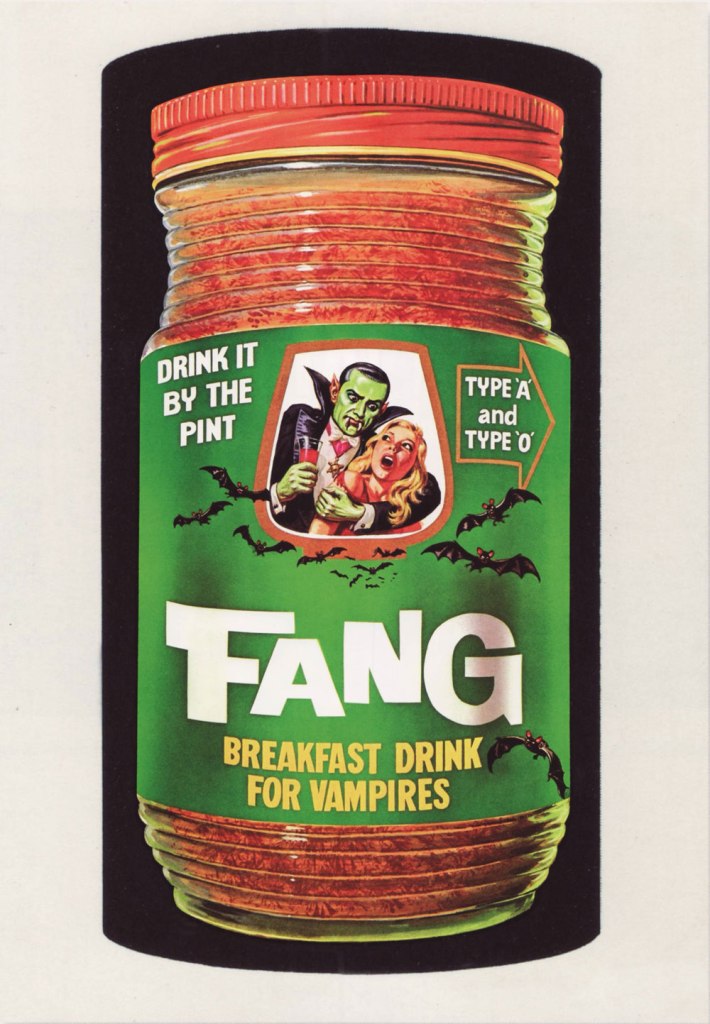
From the 6th Series (1974, Topps). Most likely painted by Norm Saunders.
From the 8th Series (1974, Topps)… though mine’s a 1980’s reprint. Painted by Norm Saunders.
From the lucky 13th Series (1975, Topps). Another fine Saunders vintage. Topps would find Mr. Saunders most difficult to replace.
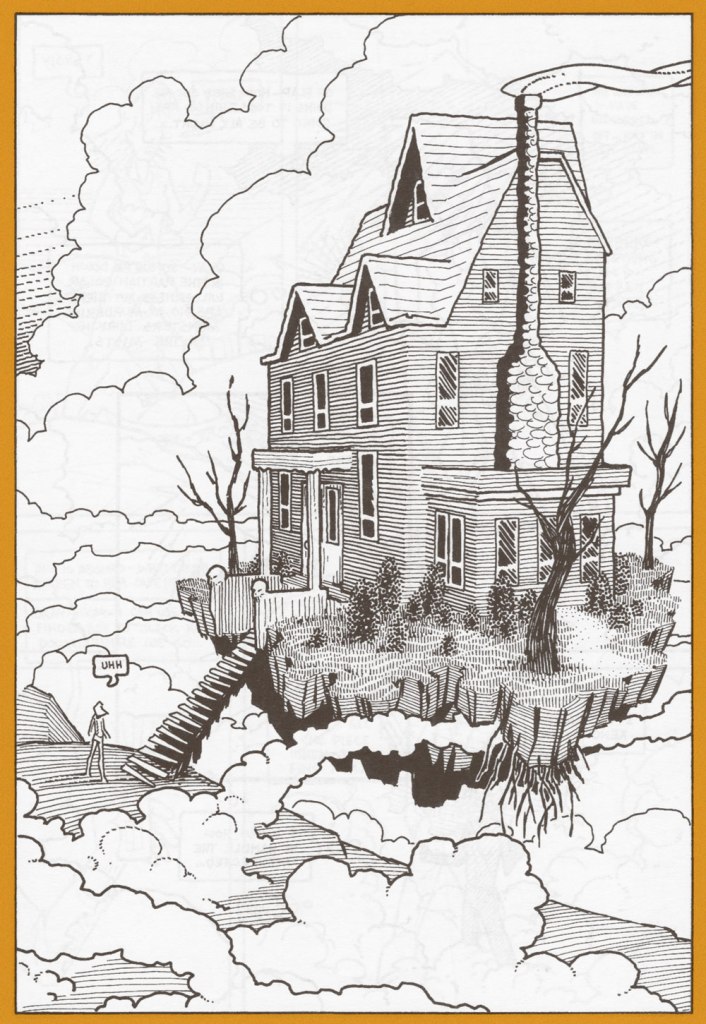
Matt Howarth‘s heroïneKēif Llama (pronounced keef yamma) has already been bestowed an exhaustive spotlight by my partner ds, so I shan’t rehash what she said. But since there are no tentacles involved in this case, I feel I’m on safe ground to take a peek at the spookiest bits of one of our favourite Xenotech’s startling interstellar encounters.
This is Keif Llama Xenotech Vol. 2.4 (Jan. 2006, Mu Press/Aeon), and despite what some have claimed, *not* a reprint of the also-recommended Fantagraphics series bearing the same name and logo.
For once, someone was thoughtful enough to provide stairs for those of us still subject to the law of gravity.
… then you will die. Sounds reasonable.
An earlier recorded instance of a Haunted House in Space, from It’s Midnight… the Witching Hour no. 14 (Apr.-May 1971, DC). Layout by Carmine Infantino, pencils and inks by Neal Adams — both presumably drawing closely on Al Williamson‘s opening splash for the cover story (right down to the deer!), which you can read here!
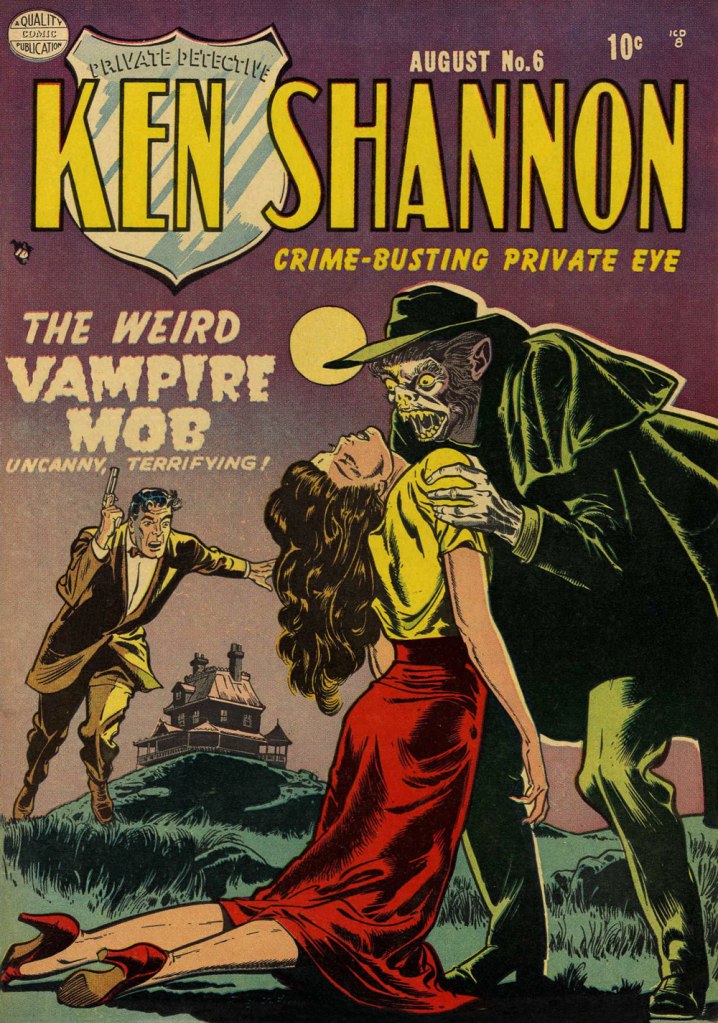
« There’s money, all right! I quoted Mrs. Tarrent a hundred slugs for this trip and she never batted a tonsil! » — Ken Shannon’s on the job.
Reed Crandall (1917-1982), one of the final additions (mid-1953… late in the ballgame!) to EC Comics’ immortal roster, previously spent most of the Golden Age years (1941-53) exclusively working for Quality Comics, and it was only when the publisher began to scale back its output, in 1953, that Crandall began to look elsewhere for additional work. After EC, he would make landfall at George A. Pflaum’s Treasure Chest of Fun & Fact, a story we’ve touched upon earlier this year.
Hard-boiled private eye (was there any other kind?) Ken Shannon was introduced in Quality’s Police Comics with issue 103 (Dec. 1950), and right away grabbed the cover spot (dethroning Plastic Man, no less!), which he doggedly retained to the bitter end, namely Police’s final bow, issue 127 (Oct. 1953). Concurrently, Shannon’s investigations were spun off into his own book, over the course of ten issues (Oct. 1951 to Apr. 1953).
Shannon certainly had his share of unusual cases to puzzle out, and here are the spookiest!
This is Ken Shannon no. 3 (Feb. 1952, Quality). From what I’ve seen and heard, these babies are scarce.
The cover story’s introductory splash. Read the entire issue here!
This is Ken Shannon no. 6 (Aug. 1952, Quality). Read the entire issue here!
And this is Ken Shannon no. 7 (Oct. 1952, Quality). Read the entire issue here!
« Hawaii can be heaven and it can be hell. » — Jeff Goldblum
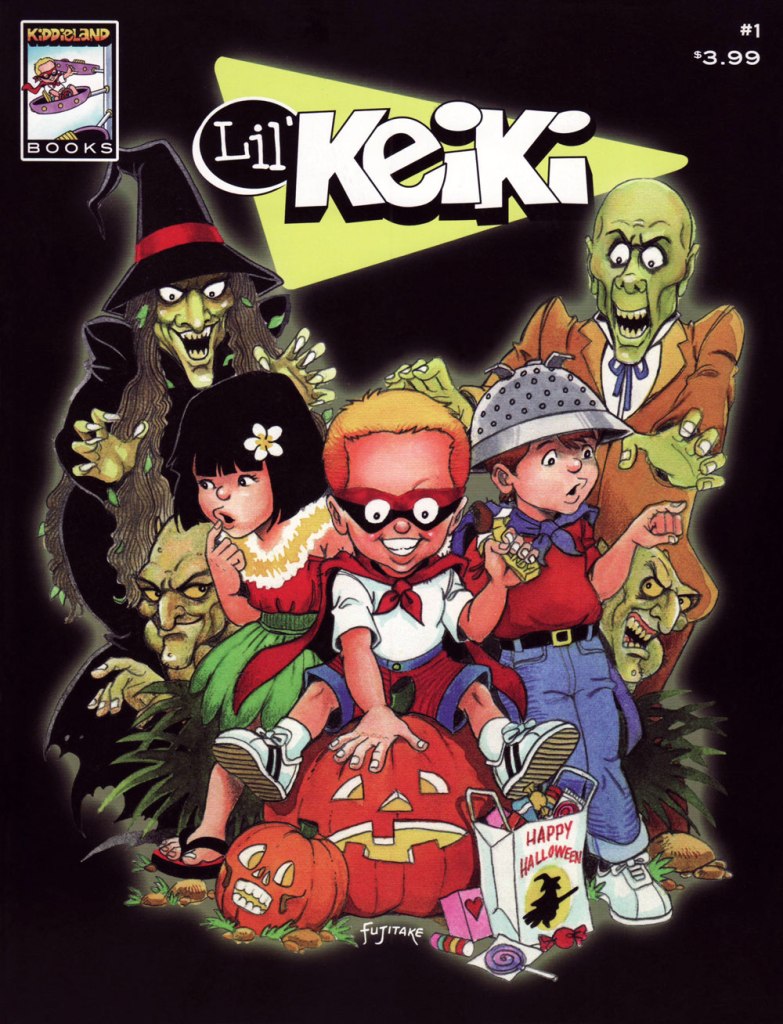
I’ve long been quite partial to Dennis Fujitake‘s work, from his fan days providing spot illustrations and covers to the Rocket’s Blast Comicollector and the fledgling The Comics Journal, then on to his splendid SF collaborations with writer Jan Strnad, Dalgoda (1984-86, Fantagraphics) and Keith Laumer’s Retief (1987-88, Mad Dog Graphics). After that, his work began to appear more sporadically: a wee bit of Elfquest in the mid-90s, a short piece here and there. If memory serves, this lower profile coincided with Hawai’i native Fujitake returning to live in the Aloha State, where he resides to this day. The Hawai’i Herald, “Hawai’i’s Japanese American Journal” currently publishes his comic strip 8-0-8.
Anyway, our current selection, Lil’ Keiki, was a sadly brief collaboration with writer Len Yokoyama released independently and yielding two lovely issues in 2005. To my eye, Fujitake’s mature style occupies a cozy sweet spot midway between the influences of Steve Ditko (Fujitake always *got* Ditko) and Ernie Colón.
To coincide with the launch of Lil’ Keiki, the Honolulu Star-Bulletin ran this profile, which helpfully illuminates the circumstances of the feature’s creation.
« She’s a haunted house / and her windows are broken. » — Scott Walker, “Big Louise” (1969)
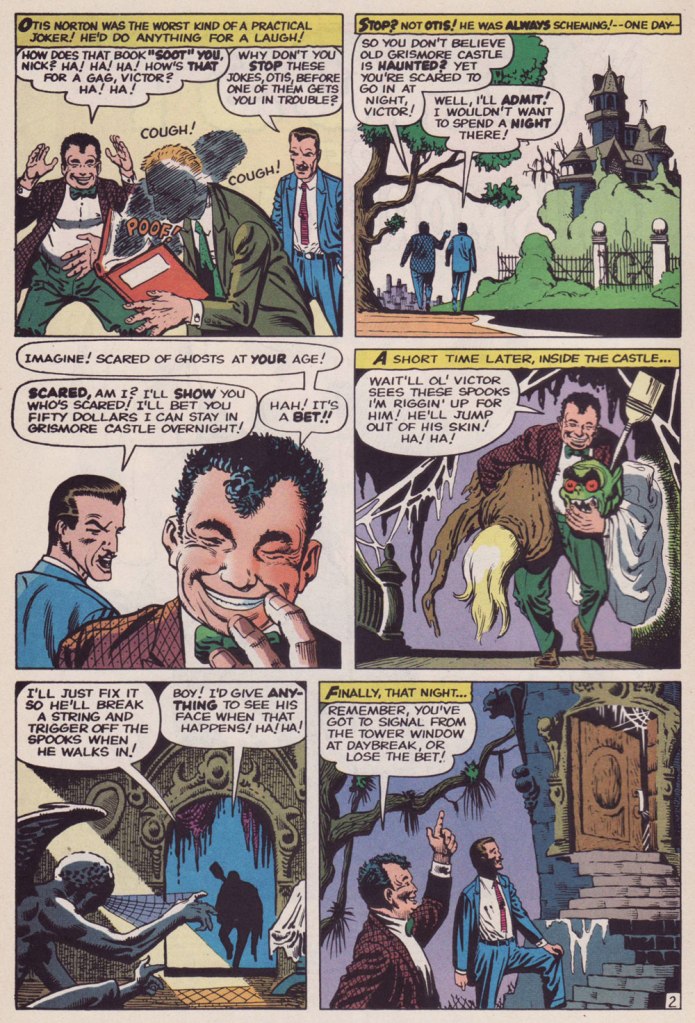
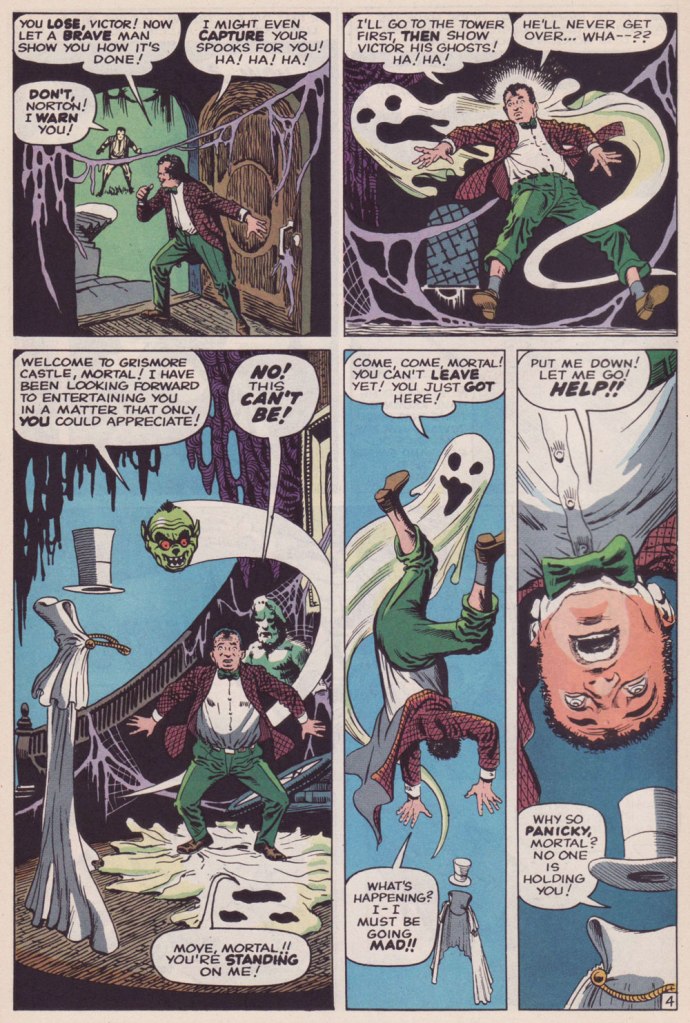
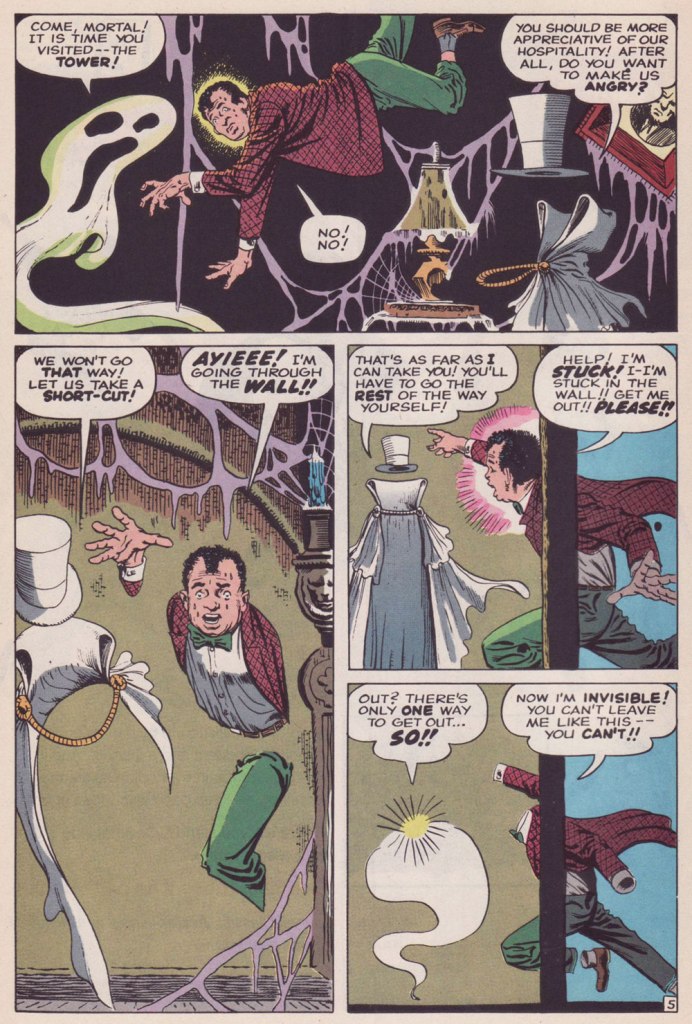
I’ve been wanting to share one of the all-time most beautiful art jobs Steve Ditko ever wittled, 1960’s The Ghost of Grismore Castle! (published in Strange Tales no. 79), but I don’t have that book. I do, however, own a 70’s reprint of it, in Vault of Evil no. 14 (October 1974), but the colouring and reproduction were so bland and washed-out that I knew that justice wouldn’t be done to this meritorious piece.
Then it hit me: I *had* seen a lovingly reconstructed presentation of the tale — has it nearly been… 30 years ago? Yikes!
It was reprinted with brio in the redoubtable Mort Todd‘s Curse of the Weird (no. 2, January 1994), a flawlessly-assembled anthology title he somehow conned Marvel into publishing in the early 90s.
So my gratitude goes out to Mr. Todd and, once more, my admiration to Mr. Ditko.
« We shot it from the original stats I dug out of the Marvel vault, rather than reprint VoE #14, and lovingly recolored it! Thanks for noticing! »
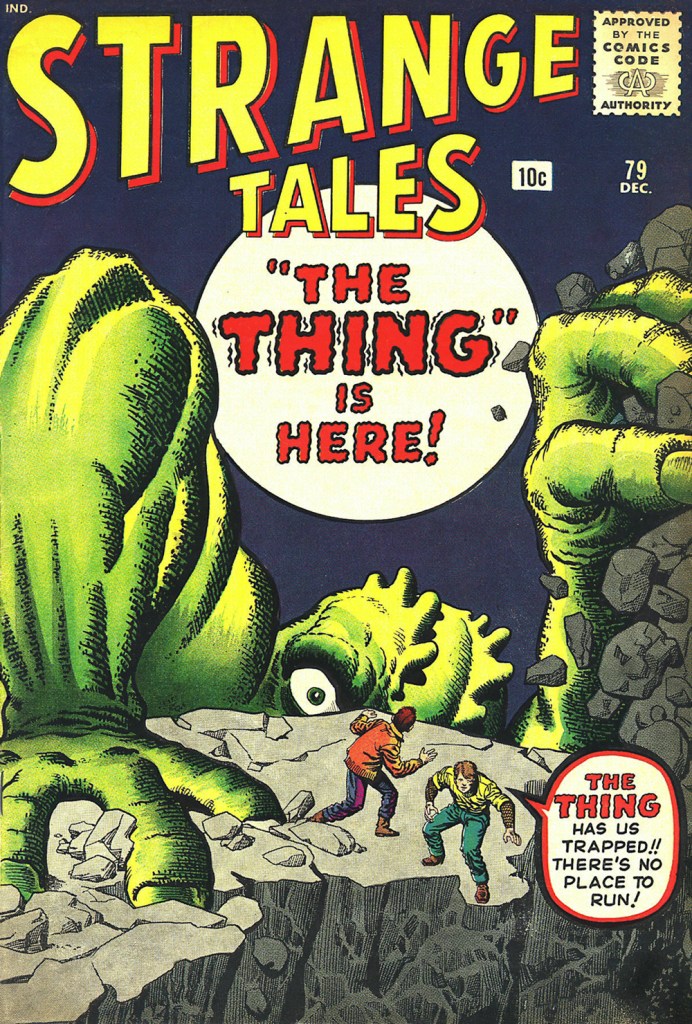
Oh, and as bonus, here’s the cover, one of those absurdly lush Kirby-Ditko collaborations. As usual with Marvel, all captions are de trop.
This is Strange Tales no. 79 (Dec. 1960, Marvel), pencils by Jack Kirby, inks by Steve Ditko. And duh, *obviously*, “The Thing” is here, Stan. Show, don’t tell.
The very 70’s update. This is Vault of Evil no. 14 (Oct. 1974, Marvel); cover pencils by Larry Lieber, inks by Frank Giacoia.
« Changing from the ghosts of faith to the spectres of reason is just changing cells. » — Fernando Pessoa
Today, let’s transport ourselves to the foggy, boggy British Isles, where every crumbling castle holds its lot of revenants and spectres within its mouldering walls.
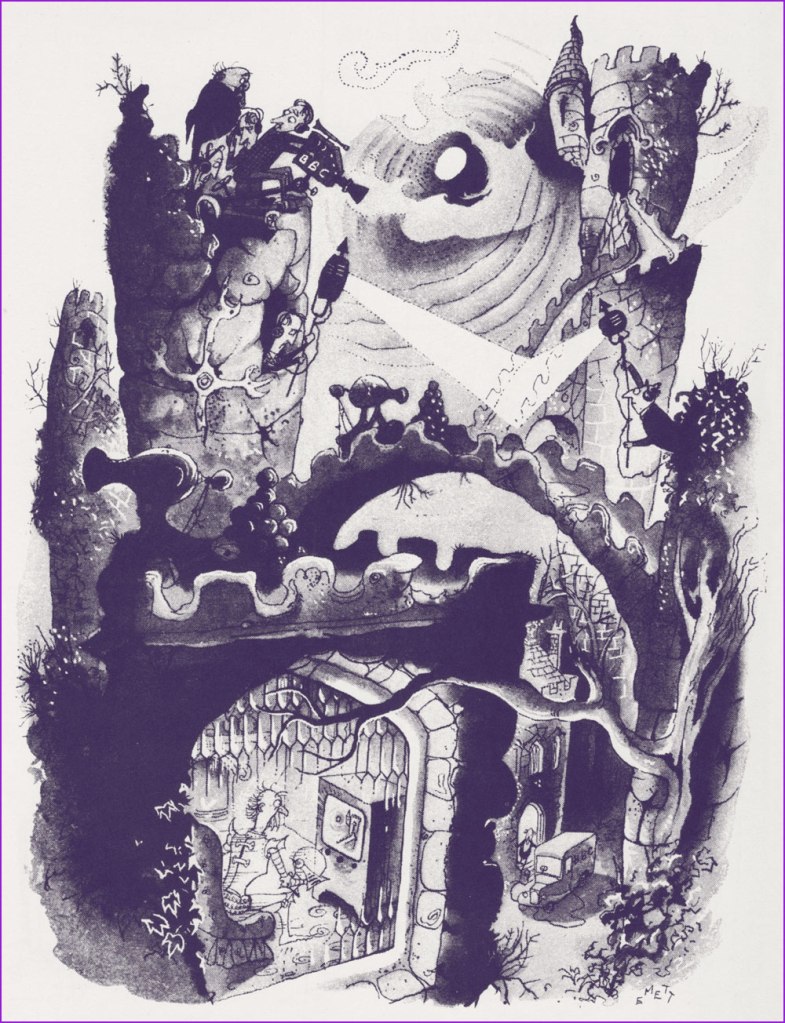
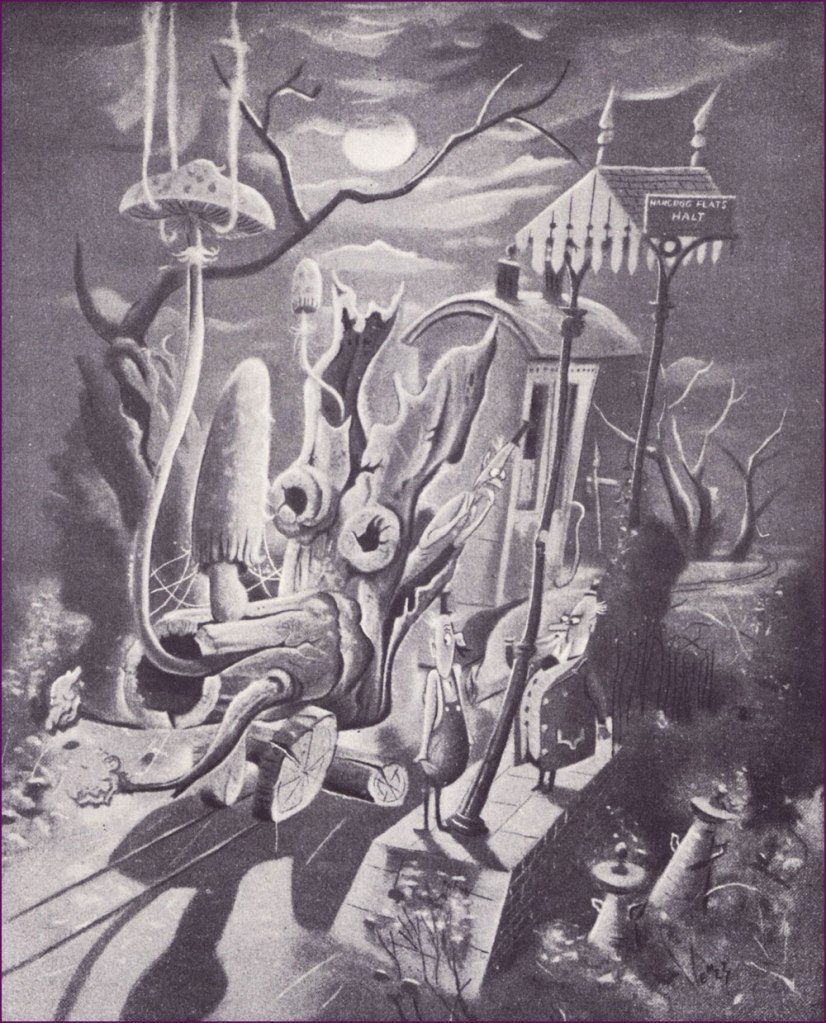
The great cartoonist, tinkerer and beloved eccentric Frederick Rowland Emett (1906 – 1990) was evidently quite at ease within this spooky world, as you shall see. He first came to prominence as a prolific Punch cartoonist, beginning in the late 30s. In the 1950s, though at the height of his powers, he found himself struggling with waning eyesight (an exacting style was his!), so he brilliantly shifted his creative focus to building what he had hitherto been drawing. You may have encountered some of these creations in the 1968 film Chitty Chitty Bang Bang (Emett andRoald Dahl… fancy that!).
Scores of his cherished kinetic sculptures — trains (“Far Tottering and Oyster Creek Branch Railway“), flying machines (“Featherstone-Kite Openwork Basketweave Mark Two Gentleman’s Flying Machine“), mechanical computers (“The Forget-Me-Not Computer“), musical hydraulic clocks (“Aqua Horological Tintinnabulator“), musical instruments and nonpareil assemblages… are scattered far and wide across the world’s museums, many of these works restored and in fine functioning order. For instance, Toronto’s Ontario Science Centre owns ten or so (see them in action here!), and the Smithsonian’s National Air and Space Museum possesses a choice few.
Obviously, there is much to discuss about this astonishing creative soul (watch him at work!). In the spirit of manageable narrow focus, I’ve kept it to three of his spookiest Punch cartoons from the late 40s-early 50s. Just consider it an amuse-gueule, an opening salvo. We shall return with a more panoramic view, you just wait.
« But Sir Bedivere always walks the battlements at this hour. Can’t think what’s keeping him. »
« Some say it’s haunted by the First Earl AND the Ninth Earl… I wonder how they’d get on together… ? »
« Go on! You ask Him!… Ask him if he’s on essential business ». This magnificent scratchboard creation was completed in 1947.
In a similar mood, here’s an excerpt or, as the Brits would say, an extract, from Far Twittering or The Annals of a Branch Line, being Some Interesting and Unusual Aspects of the Far Twittering and Oysterperch Railway Presented by Emett (1949, Faber and Faber, London). The caption tells us: « Locomotive No. 3 (Hector) at Mrs. Bristow’s Folly, now used as a water-tower. »
« I TOLD you never to take the 11:50 round by the Witch Hollow loop… ! »
A portrait of the artist, circa the mid-1950’s. Oh, he’s a wily one, all right.
« It is a well known fact that all inventors get their first ideas on the back of an envelope. I take slight exception to this, I use the front so that I can include the stamp and then the design is already half done. » — Rowland Emett
« Every scarecrow has a secret ambition to terrorize. » — Stanisław Jerzy Lec
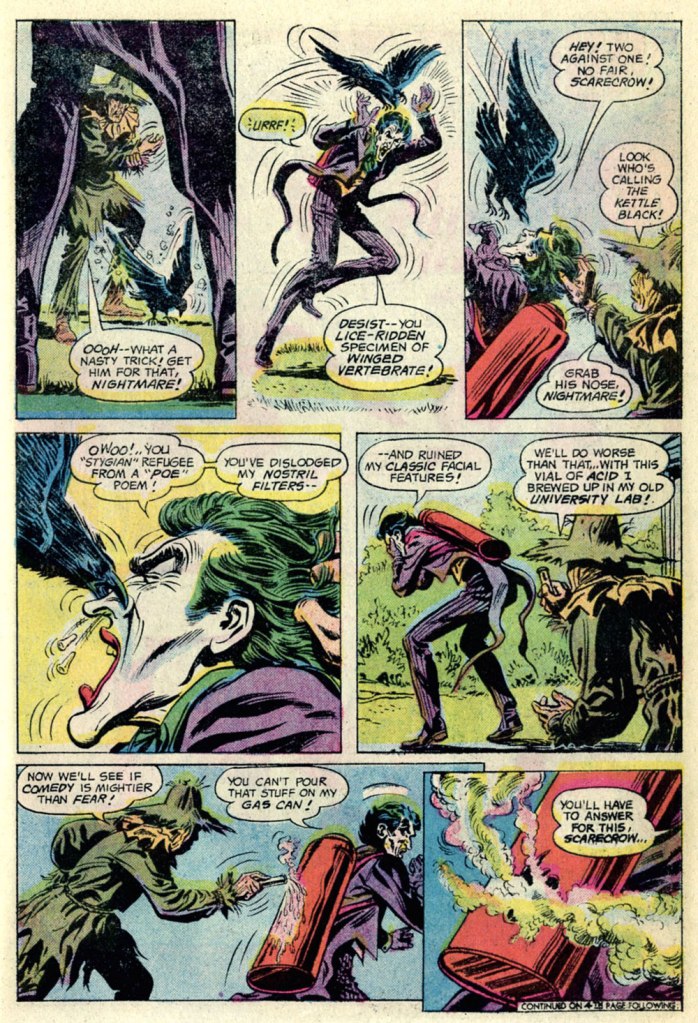
I can’t help but feel that a villain who makes time in his nefarious schedule for taking his, er, pooch for regular walks can’t be *all* bad. Likewise for a rogue who appreciates the cleverness and joie de vivre of a raven.
This is The Joker no. 8 (July-August 1976), featuring The Scarecrow’s Fearsome Face-Off!, which was edited by Julius Schwartz (in case the alliterative title hadn’t tipped you off), scripted by Elliot S! Maggin, pencilled by the always-solid Irv Novick and inked by Tex Blaisdell. Cover by Ernie Chan (as Ernie Chua).
In the mid-70s, The Clown Prince of Crime held his own book for ten issues (nine of which appeared at the time… the tenth only seeing print in… 2019!), and its stories chiefly (and rather winningly) focussed on his squabbles with other members of The Batman’s rogues’ gallery (certainly the finest in comics). I haven’t followed the dodgy shenanigans of the back issue marketplace in decades, but I was amused and bemused by the lofty prices that this otherwise-innocuous little series commands. Overflow from his cinematic popularity, perhaps?
I like the way Professor Crane works. Over these past couple of years, this last two panel sequence has probably come to pass in real life more often than one would care to count.
The Joker adopting a hyena as a companion was but a cruel cover dodge, but The Scarecrow‘s pet raven, Nightmare, is present and accounted for, superbly crafty and most efficient, just like the genuine article!
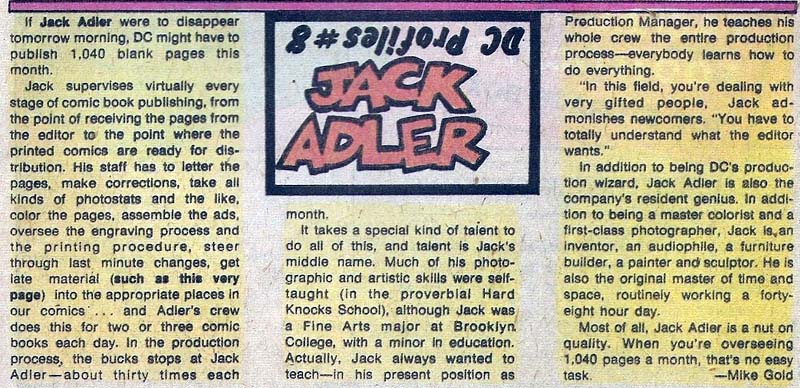
The same page, from the original printing. In closing, a slight editorial note: It’s easy to forget that, unless you kept close tabs on the printer’s work, most mainstream comics were quite badly printed… it’s especially easy to forget since much of the more popular work has since been reprinted from the original art or photostats, and digitally coloured-and-printed. Conversely, when it comes to the work of defunct publishers, and if the original artwork, or quality photostats of same, is no longer in existence or otherwise unavailable, reprinters have to make do with a flawed, not to mention secondary, sources — at best. For instance, the printing of my original edition of this Joker issue is dreadfully out of register. In the wings, things were quickly shifting at DC: as of late ’75, Carmine Infantino (publisher, etc.) and Nick Cardy (art director, etc.) were out, and an absolutely crucial production technician, Jack Adler, was being sidelined. He would retire a few years later. Long story short, Sturgeon’s Law in action, and why I went with the digital colour job. After toning down the contrast a bit. A guy’s got to have standards.
























 Who's Out There?