« If Freud had worn a kilt in the prescribed Highland manner he might have had a very different attitude to genitals. » — Woodrow Wilson
Let’s talk about your drinking.
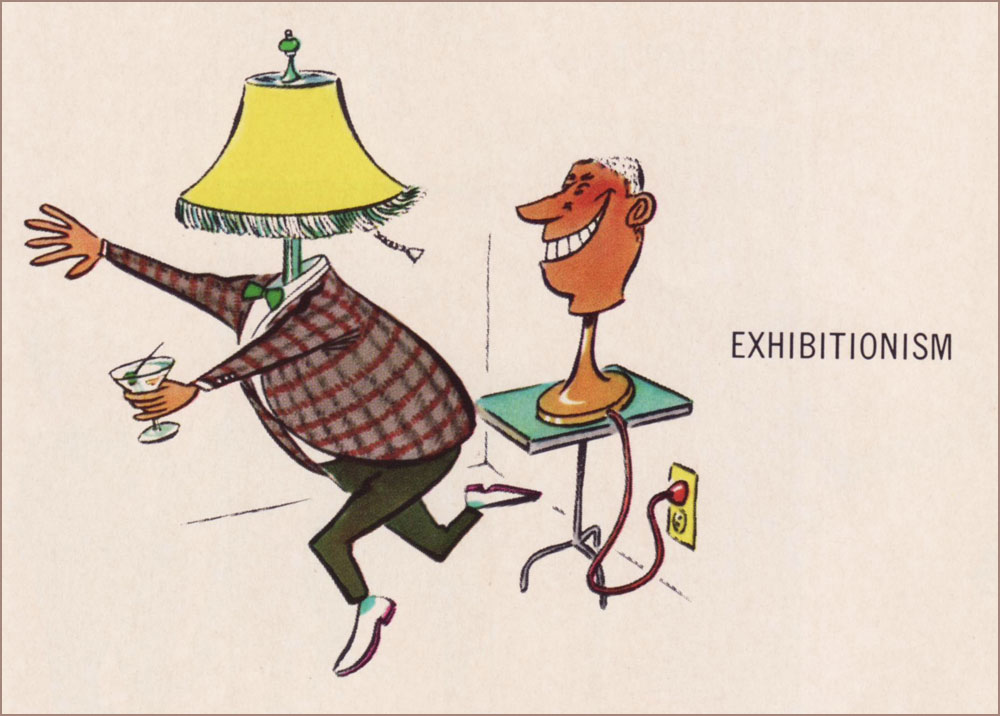
Aw, just kidding: that’s your business and none of mine. There’s certainly no shortage of reasons — or might these be excuses? — for it nowadays. Speaking of which, here’s the recipe for the Freudian Slip Cocktail, which is presumably what ol’ Sigmund is shown energetically mixing up below. Cul sec, friends!
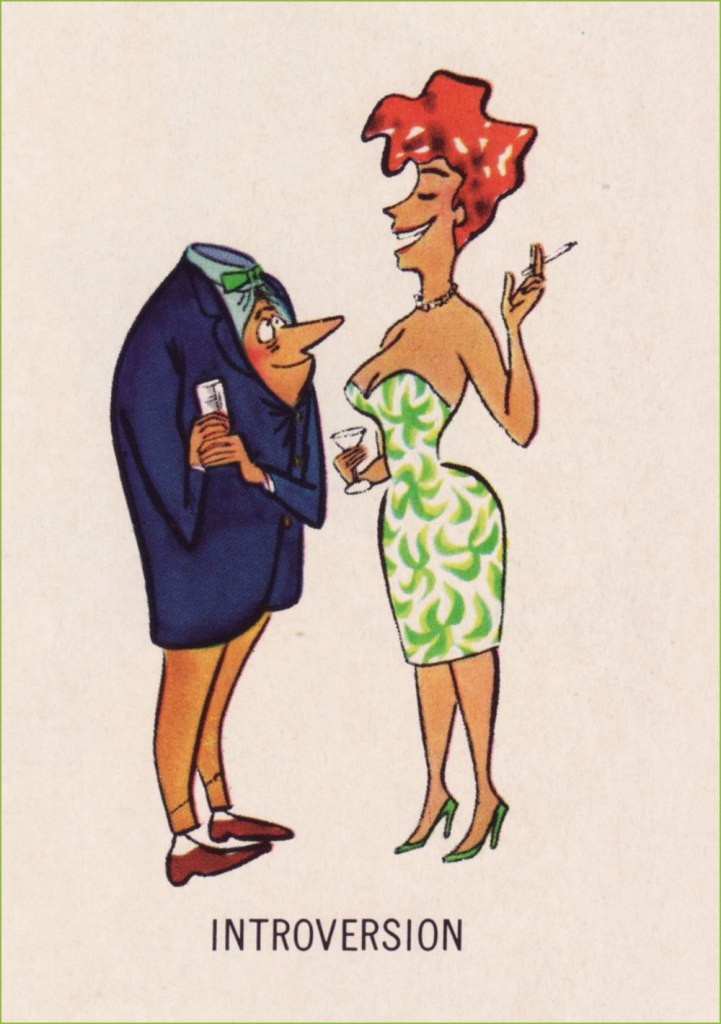
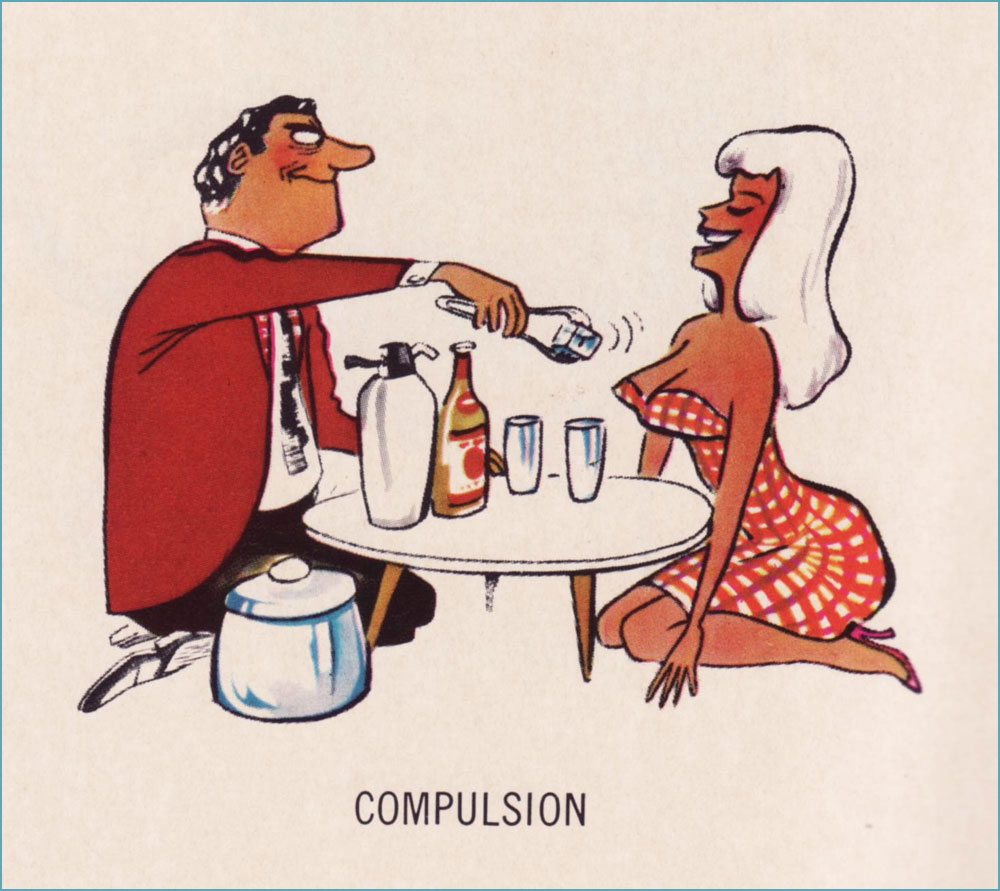
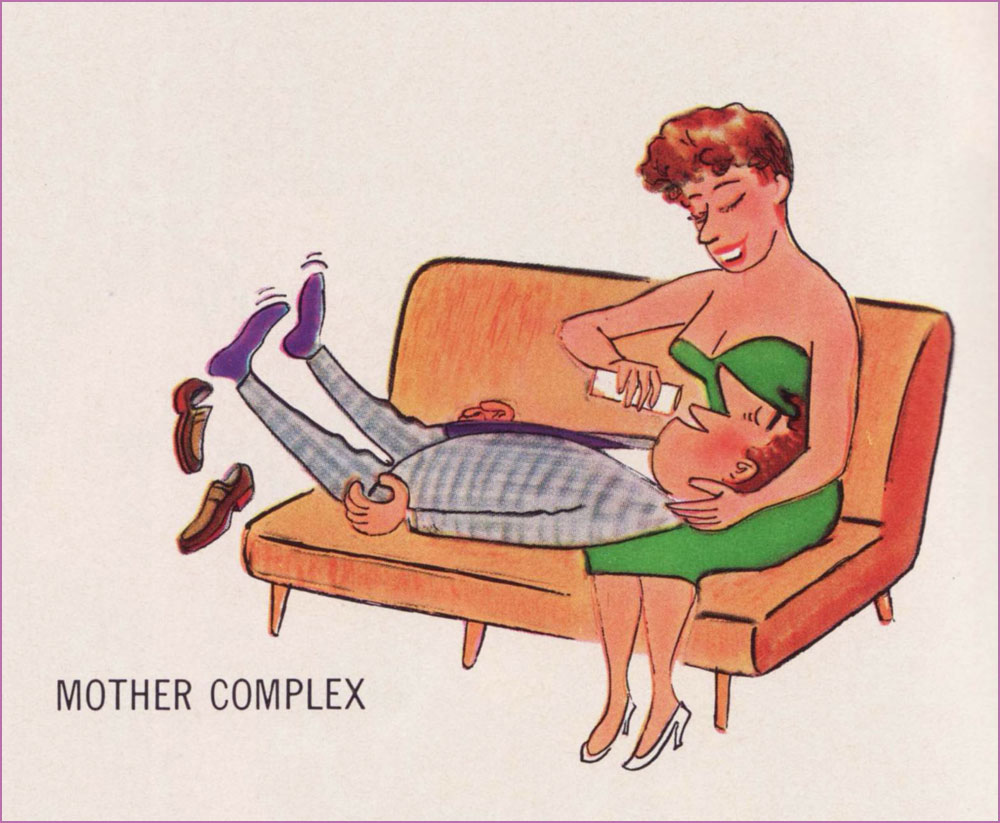
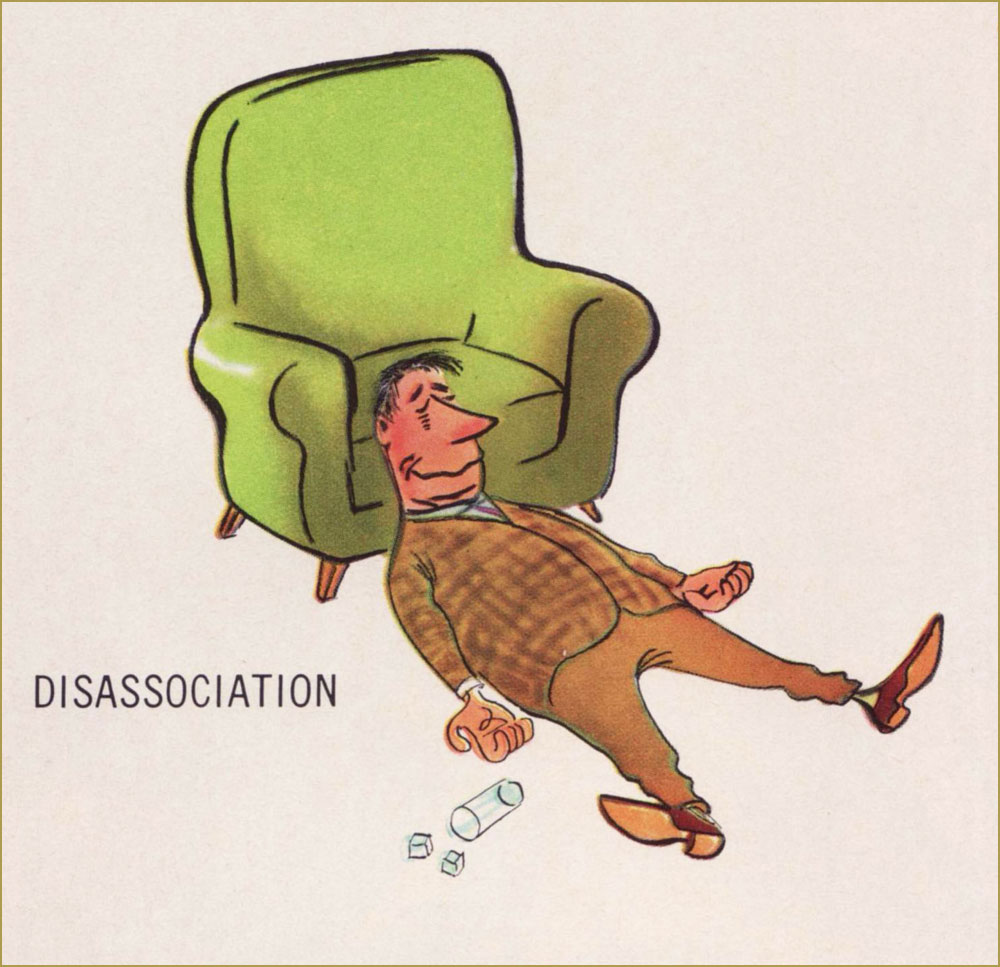
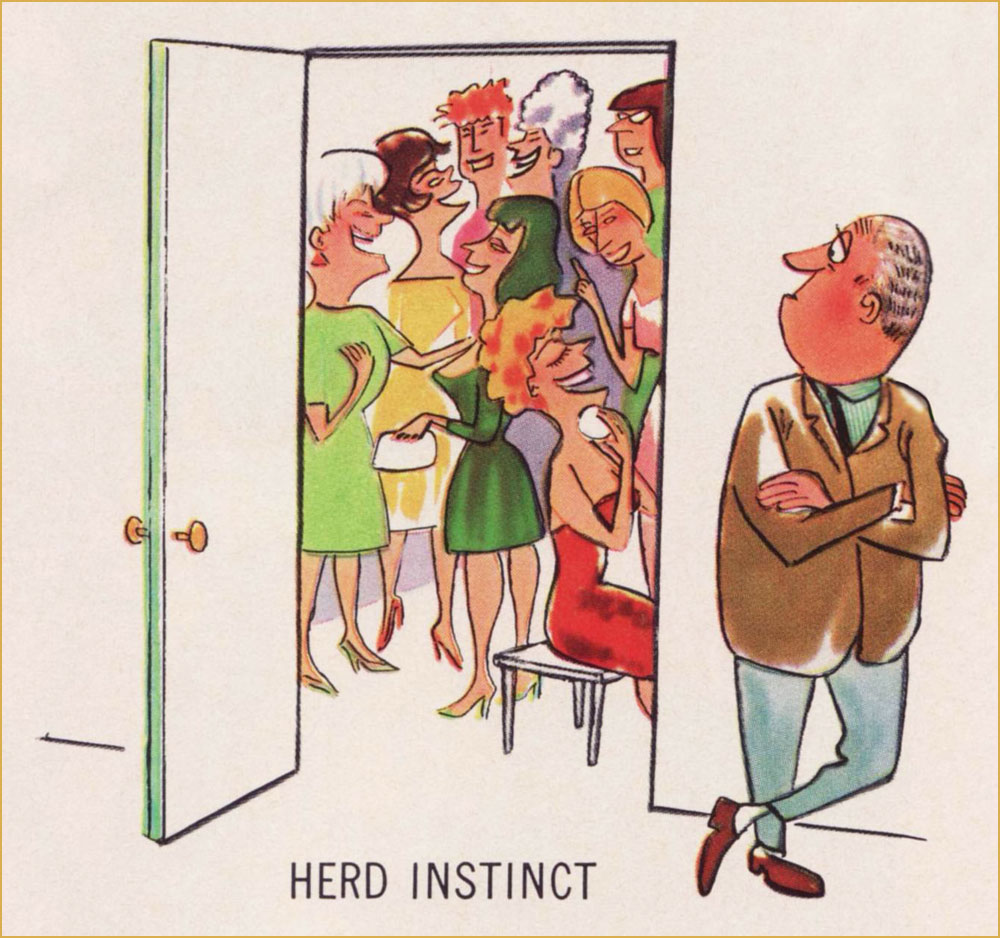
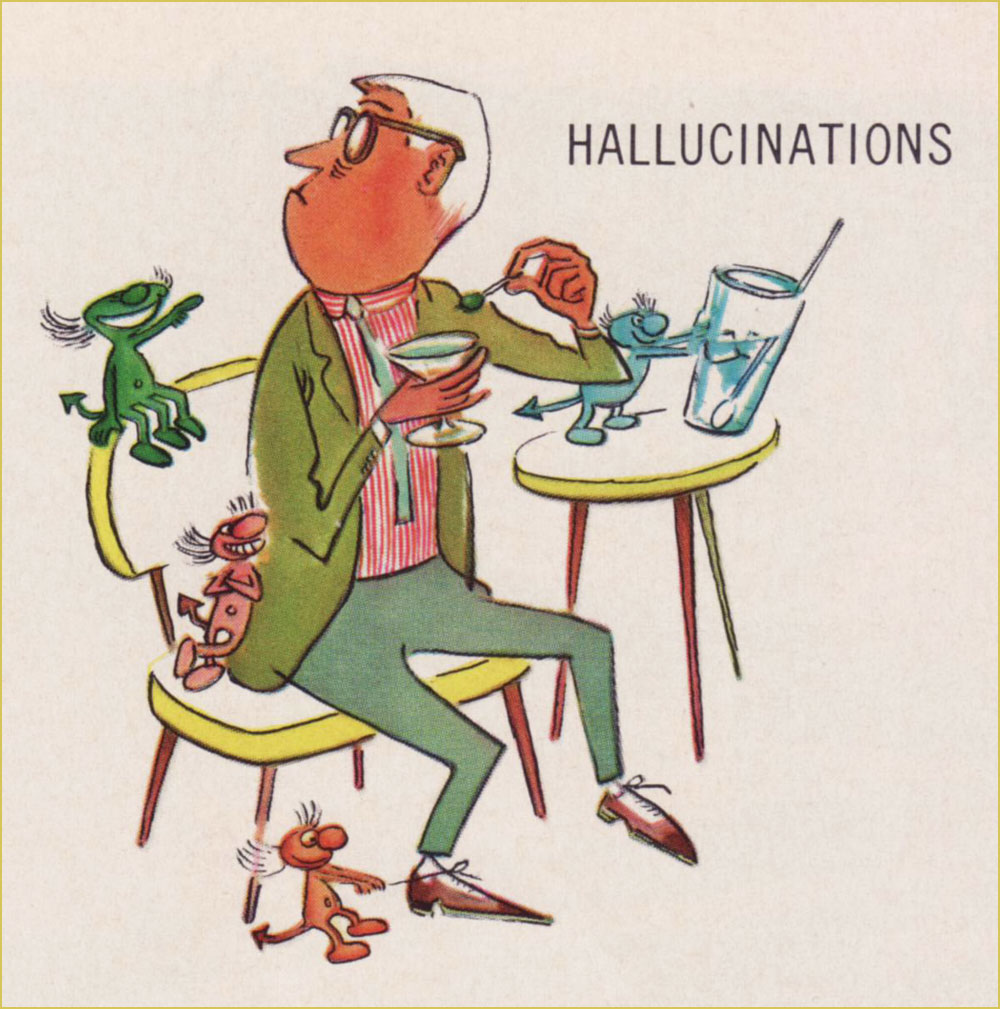
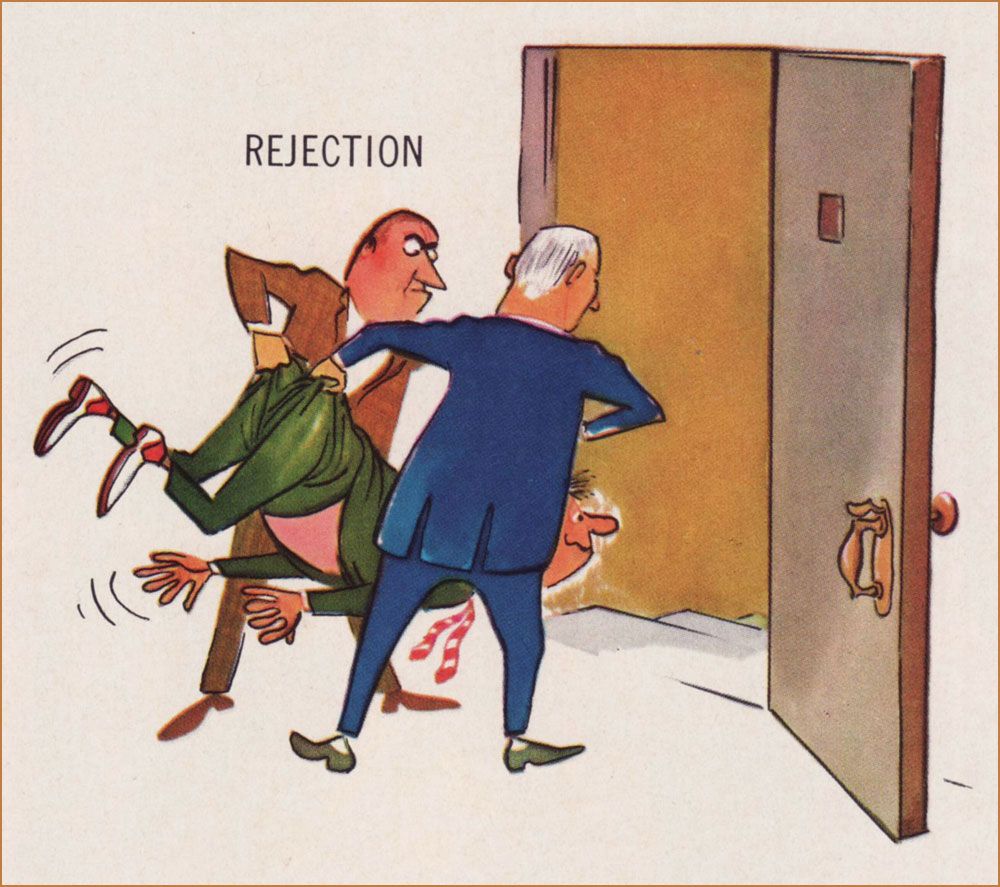
Virgil Partch‘s « Sigmund Freud’s Cocktail Party » originally appeared in Playboy Magazine’s August, 1962 issue.
There was something compulsive and witty about those cartoons in the style of the 1950s-60s era in middle class settings, smart suits, classy dresses invariably in social settings. 65+ years on I am still trying to find the exact words.
Should I presume that you *meant* to say ‘compelling’ instead of ‘compulsive’… and that it may have been a… Freudian Slip on your part? And yeah, that ‘populuxe’ style is most slinkily seductive. https://en.wikipedia.org/wiki/Populuxe
Actually I did mean ‘compulsive’, they’ve had a hold on me ever since I came across them in the 1960s. Something about those scenarios, often suggesting urban apartments, the often idealised middle class settings, world outside of the Actual, yet able to mirror all those oddities and frailties of people. A hint of Thurber within them only grounded closer to reality…..
Oh heck….I’m off again….see what I mean about ‘compulsive’?🙁
Thanks for that link to ‘Populuxe’ in all my years I had not come across it….That would sum up the atmosphere.
Come to think of it, it was a background feature of more than a few strips….Peanuts springs to mind.
No need at all to feel self-conscious about going ‘off again’, I assure you! Catching a glimpse of an erudite train of thought is a privilege, as far as I’m concerned. Cartooning of that era had its finger on a special sort of gestalt, often above and beyond what prose accomplished, thanks to cartoonists’ sense of irony and of the absurd. The whole thing makes it seem like society was about to achieve some sort of breakthrough, which goes some way in explaining its appeal to intellectual idealists. Thanks for chiming in with such valuable insights!
Only too happy to contribute.
You are spot on with those observations on the 50s-early 60s era. There was a mixing of irony and absurd.
Schulz approached it too, I recall one of his 1950s one where Charlie Brown and the original Patty find an old record ‘That Old Rocking Chair’s Got Me’, they listen, enjoying the song, the last panel moves out to the whole room and the fashionable 1950s-1960s furniture with Charlie Brown asking ‘But what’s a rocking chair?’
MAD tackled it in a myriad of its own chaotic ways, my favourite being Dave Berg’s insights into human foibles.
As a Brit I honestly learnt a great deal about American culture and society from the Cartoonists of that era.





 Who's Out There?
There was something compulsive and witty about those cartoons in the style of the 1950s-60s era in middle class settings, smart suits, classy dresses invariably in social settings. 65+ years on I am still trying to find the exact words.
LikeLiked by 1 person
Should I presume that you *meant* to say ‘compelling’ instead of ‘compulsive’… and that it may have been a… Freudian Slip on your part? And yeah, that ‘populuxe’ style is most slinkily seductive. https://en.wikipedia.org/wiki/Populuxe
That said, I highly recommend Thomas Hine’s most insightful book (1986) of that name. Sample it — slightly — here: https://archive.org/details/populuxe0000hine
LikeLiked by 1 person
Actually I did mean ‘compulsive’, they’ve had a hold on me ever since I came across them in the 1960s. Something about those scenarios, often suggesting urban apartments, the often idealised middle class settings, world outside of the Actual, yet able to mirror all those oddities and frailties of people. A hint of Thurber within them only grounded closer to reality…..
Oh heck….I’m off again….see what I mean about ‘compulsive’?🙁
Thanks for that link to ‘Populuxe’ in all my years I had not come across it….That would sum up the atmosphere.
Come to think of it, it was a background feature of more than a few strips….Peanuts springs to mind.
LikeLiked by 1 person
No need at all to feel self-conscious about going ‘off again’, I assure you! Catching a glimpse of an erudite train of thought is a privilege, as far as I’m concerned. Cartooning of that era had its finger on a special sort of gestalt, often above and beyond what prose accomplished, thanks to cartoonists’ sense of irony and of the absurd. The whole thing makes it seem like society was about to achieve some sort of breakthrough, which goes some way in explaining its appeal to intellectual idealists. Thanks for chiming in with such valuable insights!
LikeLiked by 1 person
Only too happy to contribute.
You are spot on with those observations on the 50s-early 60s era. There was a mixing of irony and absurd.
Schulz approached it too, I recall one of his 1950s one where Charlie Brown and the original Patty find an old record ‘That Old Rocking Chair’s Got Me’, they listen, enjoying the song, the last panel moves out to the whole room and the fashionable 1950s-1960s furniture with Charlie Brown asking ‘But what’s a rocking chair?’
MAD tackled it in a myriad of its own chaotic ways, my favourite being Dave Berg’s insights into human foibles.
As a Brit I honestly learnt a great deal about American culture and society from the Cartoonists of that era.
LikeLike